Friday, August 25, 2006

Exterminate!

Spare cash burning a hole in your pocket? Why not bid on this home-made robot with more than a passing resemblance to the croak-voiced enemies of Doctor Who?

Monday, August 21, 2006

Point And Click

Suggest a target for the Mars Orbiter Camera on board Mars Global Surveyor.


And here’s one of my favourite of all of the pictures beamed back from the still-functioning pair of Mars rovers. Not only because it was taken on my birthday last year, but also because sunset on Mars really makes you realise that it’s so very different from Earth.

(Note - the direct link to the picture turned out to be broken, but you can get to it via the NASA homepage by clicking on Larger Image.)

Sunday, August 20, 2006

Players - 6

After they had set off again, Randy Farrell explained that he’d been diagnosed with liver cancer three years ago, the doctors had cut a tumour as big as a goose egg out of him. He’d gotten better, but four months ago the cancer had come back worse than ever, had spread to his bones and his pancreas. He didn’t have long to live, which was why he wanted to do right by Edie. Also, he said, he loved the girl as if she was one of his own. He’d been a son of a bitch when he was younger, beating up on his girlfriends, even beating his mother once, but marriage and helping to raise his stepdaughter had grounded him. He’d even quit drinking after his last stretch in the joint, but not before the damage had been done.

His confession was well rehearsed and laced with jargon he’d probably learned at Alcoholics Anonymous meetings and cancer support groups. But he seemed sincere, telling Summer that Edie had loved to read, English had been her best subject at school and she would have studied it in college if she hadn’t grown wild and gotten into trouble with the police. Telling her that Edie had loved a little black cat she called Edgar Allan Poe, that Edie had sewn her own clothes from patterns, and she had been a pretty good artist, too. Edie and her mother had never gotten along, Randy Farrell said, but he hoped he had been some help to her. When he’d seen her that one time after she ran off, she had been full of plans; he’d given her money to buy something smart so she could try to get back to school, train for an office job. Meanwhile, she’d been waitressing in a short-order place. The manager took a kickback straight from her basic pay because she’d been on probation and he could violate her back to jail any time he wanted, but she had been making that up on tips.

‘Everything was going right for her, except for that no-good boyfriend.’

‘Have you remembered anything more about him?’

Before driving to the Farrells’ house Summer had phoned around Portland’s five precincts in case Edie Collier’s boyfriend had reported her missing, but she’d had no luck.

Randy Farrell said, ‘I saw them together once, by accident. I was on the floor above them in the Lloyd Center, looking to buy something for Lucinda’s birthday. I saw Edie with some young guy outside the multiplex there.’

‘Did you get a good look at him?’

‘When I spotted them, like I said, I was on the floor above. By the time I had ridden down on the escalator, they’d split. Went to see a movie, I guess.’ Randy Farrell was quiet for a moment. Summer glanced at him in the rear-view mirror. He was looking at something inside his head and the corners of his mouth were turned down. Saying at last, ‘I just realized that was the last time I saw her.’

‘When was this?’

‘Two weeks ago to the day. I got Lucinda a crystal dolphin. She loves shit like that. Edie didn’t even send a card, I’m sorry to say.’

‘That was the only time you saw Edie’s boyfriend?’

‘If the guy she was with was her boyfriend, yeah.’

‘What did he look like?’

‘I didn’t really get to look at him.’

‘Well, was he white or black?’

‘White.’

‘How old would you say?’

‘I guess about Edie’s age. Maybe a little older, it’s hard to say.’

‘Edie was eighteen.’

‘Nineteen next month.’

‘So this boyfriend, Billy no-last-name, was eighteen or nineteen.’

‘Maybe a little older. I didn’t get a real good look.’

‘How tall was he?’

‘I was pretty far away.’

‘Taller than Edie? Shorter?’

‘Maybe a head taller. He had black hair, too, shoulder length.’

‘What he was wearing?’

‘Jeans, I think. Blue jeans. And a big plaid shirt, some kids wear them like a coat over their T-shirt? Like that. And he had a briefcase too. Apart from that, he looked like any of those kids who hang around Pioneer Square.’

‘What kind of briefcase?’

‘What do you mean?’

‘Was it metal or leather?’

Randy Farrell thought for a moment. ‘I guess it was more like one of those cases you carry those small computers in. You know, with a shoulder strap.’

‘A laptop computer case.’

‘I guess.’

‘Did you get a look at his face?’

‘I only saw him from behind.’

‘Shoulder-length black hair, blue jeans, a plaid shirt. And a computer case.’ It wasn’t much, but it was something. There couldn’t be too many street kids who lugged around a laptop computer - or, at least, its case.

Randy Farrell said, ‘Edie told me they were in love. She showed me this cheap ring he bought her. Way she talked you could see she thought he was Mr Wonderful, but don’t you guys say that in a murder case the first suspect is the one nearest the victim?’

‘I don’t have an opinion one way or another, Mr Farrell. It isn’t my case.’

Friday, August 18, 2006

Snakes On A Plane

Kim Newman has to see it on the day of release because there are no press shows; how could I resist the invitation to tag along? Along with the usual ads and trailers the presage the main feature, there’s one of those short films for Orange mobiles in which a star makes a pitch that’s derided by a committee of movie execs interested only in product placement. This time the star is Steven Seagal, and the piece is snappily directed and packed with sharp one-liners and neat parodies on action movie tropes. In short, it’s everything that the main feature aspires to be. The set-up is famously simple. Brutal Hawaiian gangster Eddie Kim wants to get rid of a witness (Wolf Creek’s Nathan Phillips) to his slaying of a public defender, and arranges for a big crate full of venomous snakes and equipped with a timer release to be placed on the 747 in which the witness, under the protection of Samuel L. Jackson’s FBI agent, is flying to Los Angeles. The snakes are released and people start dying as the 747 lumbers into a tropical storm. The mayhem on the plane is fine, there are some good jokes and shocks, air stewardess Julianna Margulies is a nice foil to Samuel L. Jackson’s cool, and of course there’s the famous line added after the webstorm of publicity. But the movie can’t make up its mind whether it’s a spam-in-a-cabin slasher or an Airplane!, the snakes, mostly very obviously CGI’d, are a pretty monotonous multi-headed enemy that doesn’t do much but snap and lunge, a promising sub-plot with a rogue snake farmer is dismissed too quickly, and the action sags for about twenty minutes before picking up for a slum-dunk ending. Snakes On A Plane doesn’t live up to its hype (what movie could?), but it could have been a lot worse than it is, and at ninety minutes it definitely doesn't outstay its welcome.

Here's Kim's pithier review.

Thursday, August 17, 2006

Players - 5

It was a straight shot down the I-5, through the Willamette Valley to the beginning of Oregon’s banana belt. It started to rain soon after they set out, but forty miles south of Portland the sun broke through, lighting up a ragged chasm in the clouds, probing farmland on either side of the freeway with slanting fingers of light. Randy Farrell spent the first part of the trip zoned out in the back seat of the Police Bureau Taurus, waking only when Summer turned off the I-5 at Springfield for a pit stop at a Wendy’s. After picking over his plain burger and fries, he disappeared into the men’s room. Ten minutes later, Summer went to look for him and found him out back by a Dumpster, sucking on the last half-inch of a tightly rolled joint.

‘I’m licensed to use it,’ he said, giving her a defiant look. ‘It helps control the nausea I get after I eat. You don’t believe me, I have a registration card my doctor gave me.’

‘I don’t need to see your card, Mr Farrell. I’ll wait by the car until you’ve finished, but don’t be too long.’

After they had set off again, Randy Farrell explained that he’d been diagnosed with liver cancer three years ago, the doctors had cut a tumour as big as a goose egg out of him. He’d gotten better, but four months ago the cancer had come back worse than ever, had spread to his bones and his pancreas. He didn’t have long to live, which was why he wanted to do right by Edie. Also, he said, he loved the girl as if she was one of his own. He’d been a son of a bitch when he was younger, beating up on his girlfriends, even beating his mother once, but marriage and helping to raise his stepdaughter had grounded him. He’d even quit drinking after his last stretch in the joint, but not before the damage had been done.

His confession was well rehearsed and laced with jargon he’d probably learned at Alcoholics Anonymous meetings and cancer support groups. But he seemed sincere, telling Summer that Edie had loved to read, English had been her best subject at school and she would have studied it in college if she hadn’t grown wild and gotten into trouble with the police. Telling her that Edie had loved a little black cat she called Edgar Allan Poe, that Edie had sewn her own clothes from patterns, and she had been a pretty good artist, too. Edie and her mother had never gotten along, Randy Farrell said, but he hoped he had been some help to her. When he’d seen her that one time after she ran off, she had been full of plans; he’d given her money to buy something smart so she could try to get back to school, train for an office job. Meanwhile, she’d been waitressing in a short-order place. The manager took a kickback straight from her basic pay because she’d been on probation and he could violate her back to jail any time he wanted, but she had been making that up on tips.

‘Everything was going right for her, except for that no-good boyfriend.’

Monday, August 14, 2006

The Hearts of Conspiracy Theorists Everywhere Quicken

According to Sky News, NASA has lost the original footage of man's first steps on the moon.

Sunday, August 13, 2006

Playlist

After seeing the picture of my office that I posted here, Fred Kiesche asked me about the CDs lined up above my computer - what are they, and do I listen to them while I work? Mostly, like the fat wedge of Steely Dan, they’re the overspill from the groaning shelves downstairs in the living room, leavened with a bunch of recent arrivals - stuff by The Handsome Family, Richmond Fontaine, Drive-By Truckers, Ali Farka Toure, Roy Harper, Lokua Kanza, reggae compilations... Pretty mainstream stuff, really (the racks of 1920s and 1930s American music are all downstairs).

I don’t listen to much music when I’m doing the first draft, but having familiar stuff on random play on the computer helps rhythm and flow of the endless redrafting (it has to be familiar stuff, so it works mostly on my back brain). The older I get, the less distraction I can tolerate.

Some of my novels have a soundtrack; some don’t. Players doesn’t, because I think that using musical preferences as a short-hand for characterization in thrillers is a bit of a tired cliche - and too often it’s a form of showing-off by the author too.* I suspect that if Summer Ziegler listens to anything, it would be jazz-lite solo singer stuff; she certainly doesn’t slump down in an easy chair at the end of the day and sip bonded bourbon while listening to Dock Boggs.

*I know, I know: I'm guilty of it in Whole Wide World, but the punk thing is supposed to be part of John's voice rather than a quirky character tic. Honest.

On the other hand, Cowboy Angels, which was partly inspired by the idea of the lost, weird America Greil Marcus wrote about in Lost Republic does have a soundtrack. Here it is (the songs on it are either name-checked or hinted at in the text, and appear in narrative order):

Man Gave Names To All The Animals - Bob Dylan
Hook And Line - Hatton Brothers
Acony Bell - Gillian Welch
Kentucky Avenue - Tom Waits
Who Knows Where the Time Goes - Fairport Convention
Wolf Among Wolves - Bonnie ‘Prince’ Billy
America - Simon & Garfunkel
Romance in Durango - Bob Dylan
Cold Cold Cold - The Handsome Family
Lost in the Flood - Bruce Springsteen
I See A Darkness - Johnny Cash
Slow Train Coming - Bob Dylan
I Dream A Highway - Gillian Welch
Train Song - Tom Waits

Saturday, August 12, 2006

The McLuhan Test

Professor John Sutherland, in an article in the Guardian Review, passes on Marshall McLuhan’s simple but sage advice on how to decide whether or not a novel is worth buying. All you have to do is open the book at page 69 and read it; if you like that page, you’ll like the book.

In that spirit, here’s page 69 from the paperback edition of Mind’s Eye. I hope you like it. (More extracts from Players are in the pipeline, by the way, but I can't guarantee which will contain the material that will appear on page 69 of the finished book. )

5.

Harriet’s instructions took her to the edge of the London A-Z, to Enfield and a small café in the middle of a short row of shops hunched in the thunder and diesel wind of the A10's busy dual carriageway. Her handler, Jack Nicholl, had arranged the meeting with an MI5 agent, Susan Blackmore, and an informer in the Kurdish community. ‘She’ll be very protective of the guy,’ Jack Nicholl had said. ‘If anything looks funny to her, she’ll blow the meet and I won’t be able to fix you up with another. So be cool, and do everything she asks.’

Harriet allowed Susan Blackmore to pat her down in the café’s toilet. The MI5 agent searched Harriet’s handbag and confiscated her mobile phone for the duration.

‘If I see any sign that my man is going to be followed, I’ll call this off at once,’ she said.
‘I understand.’

‘And I’ll also call it off if I think someone is eavesdropping, using a video camera, or taking photographs.’

‘You don’t have to worry -- ’

‘And I will sit in while you talk with him. That’s not negotiable.’

‘Of course.’

Harriet bought two coffees and followed Susan Blackmore to a table outside the café. The MI5 agent was in her late twenties, only a year or two older than Harriet. She wore her mouse-brown hair in a ponytail pulled back

That Was Then, This Is Now

In these troubled times, when even toothpaste is a suspect substance, it’s far harder to practice do-it-your-self rocketry. How innocent we were, back then, in the Cold War, how innocent.

Thursday, August 10, 2006

Rocket Boy

A little while after my tunnelling exploits, I discovered chemistry. One of my chemistry teachers had worked in an explosives research laboratory during the Second World War, and showed us how to make thermite, what happened when you dropped potassium metal into water, and why it isn’t a good idea to hit lead azide with a hammer. And in those days (back when there was still a space race), you could go to a chemist’s shop and buy strips of magnesium, hydrochloric and sulphuric acids, aluminium powder, both kinds of iron oxide . . .

And then there was the mix of a certain weedkiller (now outlawed) and sugar that formed a junior but potent version of thermite. With a length of guttering as a Fireball XL5 style launch pad, lightly modified plastic bottles, and my weedkiller/sugar mix, I was in the rocket business. Some of the rocket bottles flew a surprising distance; one certainly surprised me by shooting about a hundred feet into the air in a graceful arc that carried it over the brook into a trash pile in the yard of the blast furnace. Like Wernher von Braun, I had aimed for the stars, but hit a civilian target instead. Luckily the small fire that the burning rocket bottle started went out before I had to wade across the brook to deal with it. Even more luckily, I still have all my fingers and thumbs; the only souvenir of my rocketry experiments is a small oval scar at the base of my right thumb.

Wednesday, August 09, 2006

Talk Is Free

I had to turn off comments for a while because a spambot fell in love with this blog. I think it has gone somewhere else now, so comments are back on. If you're interested, that is.

Dig This

The story of the tunnelling exploits of the Hackney Mole reminds me of my brief childhood career of making trenches and tunnels that invariably collapsed after only a couple of feet. Although I was inspired by stories of British soldiers digging their way out of German prisoner-of-war camps, I failed to pay sufficient attention to the technical details of props and linings. Besides, it was easier to carve mazes out of the abundant stands of stinging nettles that grew under the apple and pear trees of our little orchard, or to build camps from sticks and willow branches on the tiny island in the wide shallow pond at the bottom of the disused lock.

I grew up in the third of a row of four Elizabethan cottages in the little community of Dudbridge, a couple of miles from the Cotswold town of Stroud. To the front we had a view of a factory; to one side was the factory’s sports ground and to the other, across a brook, a small blast furnace; and at the rear was the pond where the brook ran into the old disused canal, and the prospect of countryside beyond. The cottages were each no more than three rooms stacked one on the other with a kitchen and bathroom tacked onto the back, but the acre of gardens behind them were a generous playground, and at a very early age I was allowed to roam farther afield, and expend my considerable energy in the tracks and hollows and abandoned quarries of Selsley Common.

Children are natural guerrillas, and the many of the books I read as a child - Just William books, the adventures of the Swallows and Amazons, Wind in the Willows, and Lord of the Flies - acknowledged this. I hope there are equivalent adventures in contemporary children’s books, but the few I have read were either examples of urban realism dealing with ‘issues’, or full-blown fantasy. Are there any that treat children as creatures whose natural behaviour is much more like that of Ratty and Mole and Badger (there is no better example of a den than Badger’s home in the Wild Wood) than the contemporary idea of children as miniature, unfallen, unformed adults?

Tuesday, August 08, 2006

Going Underground

I moved to London ten years ago, and very nearly bought a ground-floor flat opposite a derelict house that was owned by the famous Hackney Mole. Oddly, the estate agent didn’t mention at the time that with only a little excavation I could have had access to the Mole’s underground empire.

Players 3

On the way to confront his boss, to find out just how badly the man had screwed up while he’d been away, Carl Kelley came across one of the security guards in the trophy room. The guy had no right or reason to be there. A computerized system allowed or denied residents, guests, visitors and employees access to different parts of the mansion’s towers and outbuildings according to codes in the electronic bracelets everyone had to wear. The security guards who manned the main gate and patrolled the perimeter of the estate were allowed into the gatehouse, the kitchens and the staff dining room, that was it, but here was the new guy who’d started work just last week, Frank Wilson, wandering around a room reserved only for those with the highest privilege rating.

The trophy room took up much of the ground floor of the main tower: adobe walls hung with the heads of cougars and antelope and pronghorn deer; leather armchairs, low tables and zebra-skin rugs scattered around the central open-hearth fireplace, with its platform of rough stone and its copper hood that was as big as the vent of a Moon rocket. Carl stood just beyond the open door, a wiry middle-aged man wearing a short-sleeved white shirt and black cargo pants, an athletic bag slung over one shoulder. The security guard, Wilson, was bending to look at things in low alcoves, leaning close to things on shelves, turning now as Carl walked across the room towards him

‘This is some place, huh?’ Wilson said, with a quick, false smile.

‘I hope you didn’t touch anything,’ Carl said. ‘It takes for ever to reset the system.’

Each collectable and piece of art was tagged with an RFID chip, a little printed circuit that sent out a coded signal when pulsed with a specific radio frequency. It was possible to bring up a virtual schematic of any room in the mansion and see the pieces standing in place like chess pieces on a board. If anything was moved by so much as an inch, its icon would turn red and started blinking; if it was carried off, the computer would lock down doors and trigger the alarms.

‘I was just looking, is all,’ Wilson said. He was a good six inches taller than Carl, and wore a light blue shirt with black epaulettes that matched his pants. A nightstick, a radio and a five-cell flashlight were hooked to his belt.

Carl said, giving it right back to him, ‘Did you see anything that took your fancy?’

‘I bet you’re wondering how I got in here. What happened, I was checking the lights along the driveway,’ Wilson said. He pulled a voltage tester from the back pocket of his pants and showed it to Carl. A pair of eights was tattooed on the knuckles of the middle and ring fingers of his right hand. ‘Maybe you noticed some of them haven’t been coming on when they should. Anyhow, I saw the main door was open, I thought I should check it out, and I found the door to this room open too.’

Carl said, ‘It’s a funny thing, but the main door wasn’t open just now.’

‘I guess I must have shut it when I came in,’ Wilson said.

The man was still smiling, but something had hardened in his gaze. It took Carl back to the army, and to the orphanage before that. Two guys sizing each other up, neither ready to back down.

He said, ‘That door won’t open for anyone who isn’t supposed to be here. I got to be somewhere, but first I’ll have to let you out.’

He let Frank Wilson walk ahead of him, across the trophy room and through the doorway into the double-height foyer beyond, the man looking left and right, checking out the stuff in glass-fronted steel cabinets, in niches cut into the pink adobe. Pieces of Japanese armour mixed up with scratch-built fantasy pieces. Cases of knives and knuckledusters. Human skulls modified with sagittal crests, fangs, bony spines or frills. Stairs curved to the left and right, and high above hung a kind of chandelier of welded steel and a couple of dozen TVs, old-fashioned cathode-ray tubes without casings, circuit boards and bundles of wires open to the air, the TVs facing in different directions, showing different scenes from Trans, the computer game that had paid for all this.

Wilson said, ‘He sure has a lot of stuff. Like a museum, uh?’

‘This is my favourite piece,’ Carl said, stepping over to a niche under the sweep of the left-hand staircase, where a ceremonial sword rested on two pieces of black oak, its curved blade pulled halfway out of its red lacquered scabbard, a red tassel hanging at the end of its pommel. ‘It’s Korean, three centuries old.’

‘It’s nice,’ Wilson said without any enthusiasm, clearly wanting to get out of there now.

Carl said, ‘They used it for executions. I tried it out myself once, on a dog. Sliced through the neck-bones like they were butter.’

Monday, August 07, 2006

Players 2

Before driving over to the Southeast Precinct, Summer had checked out Edie’s stepfather, Randy Farrell, on the computer, and confirmed her suspicion that he had a record. White male, black hair, brown eyes. Five foot seven, one hundred forty pounds -- not a big guy, but he had thirty pounds and a couple of inches on her. His D.O.B. made him fifty-four years old. No scars or other identifying marks, no FBI number . . . Most of his crimes were minor -- housebreaking, receiving or attempting to sell stolen goods -- and he’d been given plenty of second chances or through plea agreements had received probation instead of jail time, which made Summer suspect that he was some detective’s confidential informant. But he’d served time in the gladiatorial arena of state prison at Salem after having been convicted of conspiracy to rob, and with no less than three charges of assault to his name it looked as if he was quick to use his fists. She remembered that he’d sat right behind his stepdaughter in the courtroom, arms folded across the front of his denim jacket, hair lacquered back from his temples, sucking on a permanently sour expression; remembered how he’d bulled up to her in the busy corridor outside the courtroom after Edie Collier had been sentenced, asking her how she liked sending a young girl to jail, turning on his heel and stomping off after she’d advised him to take it up with the judge. Randy Farrell’s wife, Edie Collier’s mother, had a record of violence, too: threatening behaviour and several charges of assault, including one on a high-school teacher that had gotten her a year’s probation, plus one charge of public drunkenness and three DUIs; her driver’s licence had been suspended after the last, two months ago.

Anticipating trouble, Summer was happy to have Laura at her back as she walked up to the bungalow. It was dusk now. Lights were burning in a couple of the bungalow’s windows, but Summer had to lean on the doorbell for more than a minute before she saw movement behind the three stepped panes of frosted glass in the front door. When it opened, Summer straightened her back and held up her badge, saw from the corner of her eye Laura move her right hand towards the Glock holstered on her hip. But the man who stood in the doorway was a skinny scarecrow, barefoot in a dressing gown that hung open over a T-shirt and boxer shorts, his face sallow and sunken and sporting the makings of a black eye. It took Summer a long moment to recognize in this ruin the man she’d faced down outside the courtroom just six months ago.

He stared at Summer without seeming to recognize her, stared at Laura, and said, ‘Whatever you’re selling, I don’t need it.’

Summer asked if she could speak with his wife.

‘What kind of trouble has she gotten herself into now?’

‘She isn’t in any trouble that I know of, Mr Farrell. Could you have her come to the door?’

‘Lucinda ain’t in any fit state to talk to the police. Why don’t you come back tomorrow?’
‘It’s about her daughter, Mr Farrell. If she can’t come to the door, you should let us in. We need to talk with her.’

The man’s attitude, a junkyard dog defending its turf, evaporated. ‘This is about Edie? What happened? Is she hurt, in hospital somewhere?’

‘Let us in, Mr Farrell. We need to talk to your wife.’

‘Oh Jesus,’ Randy Farrell said, and closed his eyes for a moment.

Laura said, ‘We don’t want to talk about this out here, Mr Farrell, in full view of your neighbours, and I’m sure you don’t want to either. So why don’t we go inside?’

‘I guess,’ Randy Farrell said, standing aside. ‘But I should warn you, Lucinda’s more than half in the bag, and she ain’t taking prisoners.’

Summer and Laura followed him down a narrow hall stacked with cardboard cartons. The air was hot and close, and stank of cigarette smoke and greasy cooking.

‘In there,’ Randy Farrell said, with a wave of a hand towards an archway filled with the flicker of TV light.

Lucinda Farrell slumped on a plastic-covered couch, a blown-up bear of a woman in a pink sweatshirt and grey sweatpants, clutching a tall glass half-full of icecubes to her bosom as she watched Oprah on the big TV across the room. A fifth of vodka, a gallon jug of orange juice, a washing-up bowl heaped with popcorn, and an ashtray full of cigarette stubs crowded a bamboo coffee table. When Summer stepped into the room, Lucinda Farrell looked at her and said with shrill but forceful scorn that cut through the laughter and applause of Oprah’s audience, ‘I got nothing to say to any cops, so why don’t the both of you march straight on out of here.’

Randy Farrell said from the archway, ‘Take it easy, why don’t you? They got something to tell you. About Edie.’

‘Edie? Fuck her. Fuck you too, for letting in these fuckers.’

Summer switched on the ceiling lights and in the sudden glare crossed the room and punched off the TV and took a position directly in front of the woman on the couch. Laura was standing just inside the archway, ready to block Randy Farrell if he tried to cause trouble. Summer said, ‘How about we start over, Mrs Farrell?’

The woman stared at Summer. Bleached hair dry as straw stuck out around her pugnacious face. ‘My daughter ran out on me four months back. Anything she did, it isn’t my problem, she’s over eighteen now. So how about you say what you got to say and get out.’

Summer waited a beat, making it clear that she was doing this in her own time. ‘Mrs Farrell, your daughter was found badly injured this morning, in woods near a town by the name of Cedar Falls. I’m very sorry to have to tell you that she died on the way to hospital.’

‘Jesus Christ,’ Randy Farrell said softly.

Lucinda Farrell leaned forwards and with the frowning concentration of a small child sloshed a good three fingers of vodka into her glass. She added a splash of orange juice, sucked down half the drink, and said to no one in particular, ‘So that’s that.’

‘Mrs Farrell, the Sheriff’s office in Cedar Falls would like you to make a formal identification -- ’

The woman flapped a hand. ‘She was dead to me when she left this house. I told her so, she said she didn’t give a fuck, and she hasn’t been back since. So why should I give a fuck now?’

‘You need to do the right thing by your daughter,’ Summer said.

‘I already done all I could by her,’ Lucinda Farrell said flatly, and drained the rest of her drink.

Summer tried to talk her around, but the woman retreated into stubborn silence, clutching her glass in her swollen paws and glaring at a spot somewhere beyond Summer’s left shoulder. At last, Summer said, ‘I’ll come back tomorrow. We’ll talk about this again.’

‘Switch on the fucking TV on your way out. I wanna see Oprah ask Demi Moore about her toyboy.’

Summer ignored her request, and in the hallway asked Randy Farrell if Edie’s biological father lived in Portland.

‘He died in a car accident way before I met Lucinda. Edie kept his name, but if she has a father -- Jesus, had one -- it would be me.’

Summer said, ‘I’ll have to come back tomorrow, Mr Farrell. I have to talk to your wife again.’

‘Won’t do any good.’

‘The local police need her to ID her daughter. It’s a formality, but it has to be done before they can release the body. And at some point your wife will have to think about funeral arrangements.’

Randy Farrell shook his head. ‘Lucinda meant what she said about Edie being dead to her. She never once tried to find her after she ran off, never once visited her when she was in jail . . . ’

‘Talk to her, Mr Farrell. Tell her that she needs to do the right thing by Edie. I’ll come by
tomorrow morning, talk to her again.’

‘She sets her mind to something, that’s it. Edie was the same way.’ Randy Farrell looked at Summer and said, ‘How she ended up, out there in the woods. You have any idea how she got there?’

‘I’m sorry, Mr Farrell. It isn’t my case.’

Before setting out for the Southeast Precinct, Summer had called the Cedar Falls Sheriff’s office and talked briefly with Denise Childers, the detective in charge of the case. The woman had been friendly enough, but hadn’t given anything away.

Randy Farrell said, ‘She didn’t have any reason to leave Portland I knew of. You should ask her boyfriend what she was doing out there.’

When Summer had been given this job, she’d believed that she wouldn’t get much out of it. If she messed up, she would confirm Ryland Nelsen’s unvoiced suspicion that she was a hotshot promoted beyond her experience and capability. And if she did okay she’d probably be landed with every next-of-kin notification the Robbery Unit had to deal with: it was the kind of dirty, thankless task that male cops liked to pass on to their female colleagues because, according to them, women had better people skills. Now, though, she felt a twinge of interest and said, ‘Do you have a name and address for this boyfriend?’

Randy Farrell stared past her for a moment, then said, ‘I think it was Billy something.’

‘Do you have a last name? An address?’

Randy Farrell shook his head. ‘I never met the guy, and I only talked to Edie one time after she took up with him. She told me she and him were living out of his van. I wasn’t too happy, hearing that, but she said she was doing fine.’

‘When did she leave home?’

‘First week in February, just after her birthday. She and her mother had a big bust-up.’

‘And she ran off to be with her boyfriend?’

Randy Farrell shrugged.

‘How long had she known him?’

‘Let’s put it this way, I’d never heard of him before she ran off.’

‘Does he have a job?’

‘I wouldn’t know.’

‘They were living in his van. Where did they park at night?’

‘Somewhere over near the airport I think.’

Laura said, ‘I’ll ask the guys in the Northeast Precinct to keep a look out. Mr Farrell, do you know if they had a regular spot where they parked at night? Up in Piedmont, maybe? Maywood Park?’

‘Somewhere near the airport, that’s all I know.’

‘How about you tell me something about this van,’ Laura said. ‘Make, colour -- anything at all.’
‘Like I said, I never met him, and I never saw his van either.’

Summer said, ‘Take your time, Mr Farrell. Anything you can remember could be a big help.’

‘I remember that she was happy, when I saw her. She had plans, she was thinking of going back to school . . . What will happen to her if no one looks after her? To her body, I mean?’

Summer said, ‘If no one claims her, the state will serve as sponsor.’

‘Yeah, that’s what I thought. And the state will bury her in a cardboard coffin without a marker. She doesn’t deserve that.’ Randy Farrell paused, then told Summer, ‘I know who you are. You’re the one arrested Edie just before Christmas. You were in uniform then, but I don’t forget a face. Listen, it’s okay, I’m not blaming you for what happened to her, but how about cutting me a break?’

‘If you want to help Edie, Mr Farrell, you should persuade your wife to go make the ID.’

‘You need someone to make the ID? How about you take me to Cedar Falls,’ Randy Farrell said.

‘I’ll take care of whatever arrangements need to be made, too. I have money.’

‘Perhaps I should come by tomorrow and talk to your wife again.’

‘It won’t make no difference. But I want to do right by Edie, even if Lucinda doesn’t.’

Summer saw that the man was genuinely upset. ‘I’ll tell the police in Cedar Falls about your offer, Mr Farrell. That’s the best I can do right now.’

‘I was like a father to her, you understand? I helped raise her for more than ten years, I want to do right by her now . . . You tell them that. Also, you should explain that I have cancer of the liver and I can’t drive on account of my medication, the side effects. I get these blackouts. So you tell them, if they want someone to ID her, either you take me, or they’ll have to come get me.’

Summer took out one of her cards and handed it to him. ‘If you remember anything you think might be useful, anything at all, give me a call and I’ll pass it on to the detective in charge of the case. But right now, Mr Farrell, maybe you should go look after your wife. I think she’s more shaken up than she lets on.’

Outside, Laura Killinger hitched up her Garrison belt and said, ‘Edie Collier was brought up by those two, and all she had on her sheet was shoplifting? She must have been some kind of saint.’

Friday, August 04, 2006

Players 1

Late Tuesday afternoon, the Robbery Unit of the Portland Police Bureau, Detective Sergeant Ryland Nelsen called Summer Ziegler into his office. He didn’t ask her to sit down, so she stood in front of his desk, straight-backed in a cream blouse and black skirt, waiting for him to finish studying a custody report. She’d dressed for a court appearance that had eaten up most of the day, and she’d been working late, finishing paperwork. She wished now that she’d gone straight home at the end of the shift, because she was dead certain that her boss was about to hand her yet another petty errand.

He took his own sweet time with the report, reading both sides, saying at last, ‘Do you believe in karma, Detective Ziegler?’

‘As in fate?’

‘As in be sure your sins will catch up with you.’

‘I believe it would make our work a lot easier if karma caught up with all the bad guys.’
Ryland Nelsen dropped the report on his desk, leaned back in his chair and laced his hands behind his grey buzz cut. ‘Cast your mind back to last December. You arrested a young woman name of Edie Collier.’

Summer thought for a moment. ‘She tried to boost a couple of cashmere sweaters from Meier and Frank, the store detective challenged her, she made a run for it. I was cruising the area, helped chase her down. She got thirty days’ county time plus two years’ probation.’

‘She got county time for shoplifting? All my arrests should go up before that judge.’

‘She was already on probation for another shoplifting offence, plus she had a bunch of priors. She pled guilty at arraignment and the judge told her he was going to give her a short, sharp shock, stick her in jail over Christmas in the hope it would straighten her out. But I guess it didn’t.’
Summer also guessed that Edie Collier must have gotten into something much more serious than shoplifting if she had come to the attention of the Robbery Unit, which investigated thefts involving use of a weapon or threats implying the presence of a weapon; mundane property crimes like shoplifting were handled by uniformed police and precinct detectives.

‘I don’t know if it straightened her out or not,’ Ryland Nelsen said. ‘I do know that a couple of fishermen stumbled across her in woods way the hell south of here, near Cedar Falls. Know where it is?’

‘I’ve driven past it.’

‘On the I-5. Me too, but I never stopped. Anyhow, she was badly injured from some kind of fall, and she died before the paramedics could get her to hospital. The local police are treating it as a suspicious death. They identified her from fingerprints and found out that her last known address was in Portland, and their Sheriff put in a call to the Chief’s office, asked if someone in the Bureau could inform Edie Collier’s parents and persuade them to make the trip to Cedar Falls for formal ID and disposition of the body. And, well, the request bounced down the chain of command to the officer who last arrested her.’

‘Me,’ Summer said, with a falling sensation.

‘You,’ Ryland Nelsen said, pointing his forefinger at her and cocking his thumb gunwise. ‘During your time in uniform, were you ever asked to do a next-of-kin notification?’

‘No, sir. We left that kind of thing to detectives.’

‘And just three weeks ago you got your detective’s badge . . . See what I mean about karma?’

Thursday, August 03, 2006

Blue World

The films of M. Night Shyamalan more often have their roots in literature rather than in other films. His latest, Lady in the Water, is no exception: like many of the novels of Gene Wolfe, Peter S. Beagle and Jonathan Carroll, its plot turns on the realisation by its hero that he is an archetype inhabiting a mythic story he can survive only by coming to terms with his true nature.

Lady in the Water’s premise, that the root of human sin is due to a break with the wise inhabitants of the Blue World of water, is rather silly and made sillier by a sententious voice-over that explains it, but its story is simple enough. A water nymph named, er, Story (played by the ethereal Bryce Dallas Howard), has been sent to find the writer she’s destined to inspire, so that he can finish the book that will, eventually, save the world (I’m not giving anything away by noting that the world-saving writer is played by none other than the film’s director). She’s helped by Cleveland Heap (Paul Giamatti), who finds her in the swimming pool of the apartment building where he works as superintendent. With the help of Korean student Young-Soon Choi and her mother, Heap must unriddle the bedtime story into which he’s been plunged, and locate the writer and the other people needed to help Story complete her quest and protect her from her enemy, the hyena-like Scrunt that haunts the apartment building’s grounds.

Most of the plot twists are derived either from the deus ex machina rules of Story’s quest, or from cases of mistaken identity as Heap tries to find amongst the apartment building’s tenants those predestined to help Story. And there’s the rub. M. Night Shyamalan’s best films are driven by conflict between vividly-drawn counterpart characters - ghost and ghost-whisperer in The Sixth Sense; hero and villain in Unbreakable. But since a football team of people are needed to protect and help Story, and there are at least two candidates for every place on the team, there are so many named characters packed into the movie’s 90-odd minutes that there’s little space to develop most of them beyond stock types.

The central characters fare little better. After a strong introduction, Story does little but huddle in the shower and refuse to divulge vital information, and even Cleveland Heap fails to stir the audience’s empathy when he finally realises his true nature and comes to terms with the Hero’s Wound that drove him to hide away from the world in a modest job in a modest apartment building. The Scrunt provides several good shock moments, there’s plenty of typically crisp dialogue and clever ideas, and there’s fine comedy relief from Young-Soon’s obtuse mother and an acidulous film critic (a nice cameo by Bob Balaban). But Shyamalan’s failure to develop strong central characters leaves the mechanics of his plot and the paint-by-numbers symbolism of his story overly exposed. For a movie that promises world-changing events, Lady in the Water ultimately feels as hermetic as the bubble of water in a snow-globe.

Tuesday, August 01, 2006

Where I Get My Ideas From - Part 40581 Of An Endless Series

Down to the West End last night to catch a preview of M. Night Shayamalan’s Lady in the Water (I’ll post a review in a couple of days). Sitting outside the Bar Italia in Soho, we were engaged in conversation by an eccentric fiftysomething fellow in a kilt who was treating his old Italian mother to dinner (she was the very picture of an old Italian mother, complete with cloche hat and shawl, somewhat in her dotage and addressed by her doting son with affectionate exasperation; if you put the pair of them in a novel you’d be accused of stereotyping). In short order, we learned that he was a cellist and had been down to Sussex on some kind of camping holiday (don’t go there) that seemed to have involved country dancing. Then his attention wandered to a young couple sitting down with their baby and after a little to and fro the father (also Italian) brought the baby over so that the old Italian mother could not only admire it, but also give it a wee cuddle - something British parents would almost never do. Meanwhile, the restless and voluble kilt-wearing son had wandered over the café across the road to make more friends. I love this crazy town.

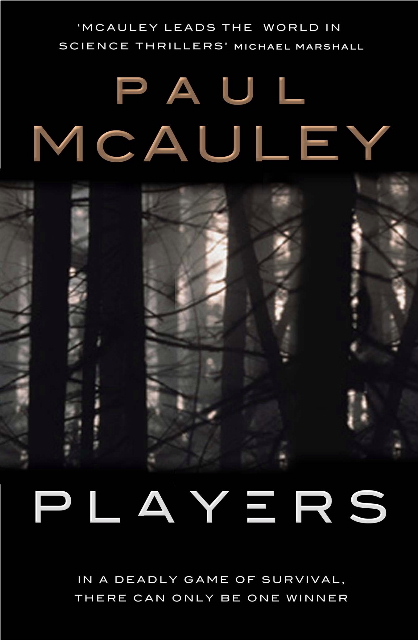
Players: The Cover


Here’s a rough of the cover for Players. I very much like the menacing glow burning through the trees (much of the novel is set in the woods of South-west Oregon, where I spent some time last year; they are both lovely and spooky - especially spooky when there’s a lull in the ambient insect- and bird-song, and you think: bear).

I’ve just finished the copy edit, and now I have to work up notes about the changes I made, and key in all the changes in the hard copy to the electronic version of the text. I’ll start putting up some chunks from it soon.

Saturday, July 29, 2006

Chasing Perfection

I’m coming up to the final stretch of copy-editing work on Players. After that, the manuscript will be checked over at the publishers, and then it will go off to the printers. When I get a set of proofs, I’ll have a last chance to correct infelicities, repeated words, howlers and simple spelling mistakes before the book goes into production. Almost inevitably, some mistake or other will get through; you can chase perfection as long as you like, in the company of your editor, sub-editor, copy-editor, friends . . . but it's like Zeno's paradox. You can only approach the target in ever smaller increments, you can never reach it.

You might think that poets have it easier - their books, after all, usually contain far fewer words than the average short story, let alone a novel. But as Don Paterson notes in a day-in-the-life article in the Weekend Guardian, they have to watch out for a special horror - inadvertent acrostics formed by the first letters of succeeding lines. On the other hand, he’s able to read his poems line by line backwards to ferret out glitches; just try doing that with a novel. I dare you.
Newer Posts Older Posts