Saturday, January 15, 2011
Getting Into Death
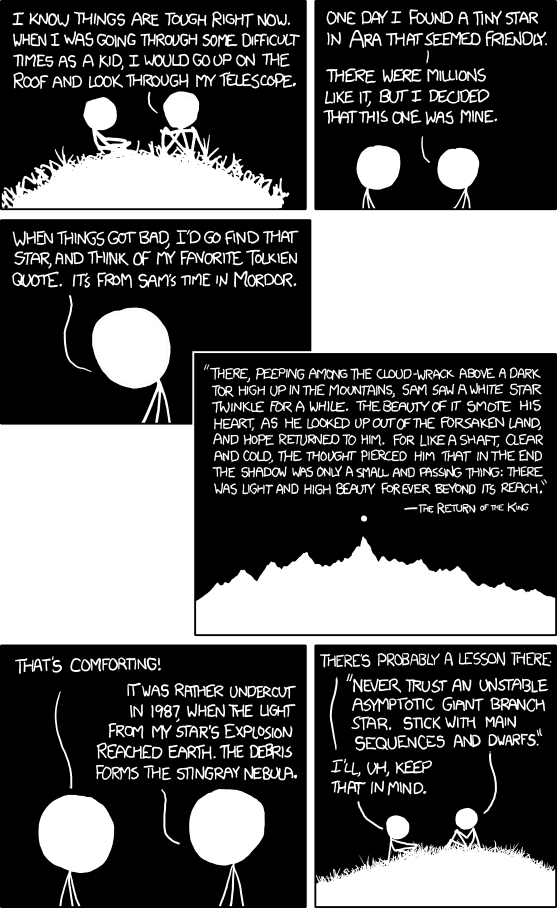
Here were Joshie's beginnings. A dystopian upper-class childhood in several elite American suburbs. Total immersion in Isaac Asimov's Science Fiction Magazine. The twelve-year-old's first cognition of mortality, for the true subject of science fiction is death, not life. It will end. The totality of it. The self-love. Not wanting to die. Wanting to live, but not sure why. Looking up at the nighttime sky, at the black eternity of outer space, amazed.Which set me to thinking about my own long-ago self, when he was at that golden age. Was he really getting into death, back then, when he got hooked into the mainline of SF? I don't think that he thought that he did. He was a bright, disorganised kid living in a small town, and like many such he wanted to get out. SF opened up new worlds to him. America. The future. Easy travel to other planets. And some of his favourite stories - Theodore Sturgeon's 'The Way Home', Tiptree's 'Beam Me Home' - were about about ways of escape. When he looked up at the stars in the summer nights sky, he wasn't thinking about eternity. He was wondering if someone like him was up there on a warm wet blue planet circling a yellow star, looking up at their night sky and thinking what he was thinking. He was projecting. He wanted out bad, and SF was balm to that ache.
Gary Shteyngart, Super Sad True Love Story
Well I got out, and I became a scientist, which is what I wanted to be, and then I became an SF writer, which I also wanted to be, and how cool is that? And now I think, about the SF I read and the SF I write: yeah, in one way or another, it's all about death. I'm just starting in on the editing process of a novel about avoiding the inevitable and the costs this could incur, which is one reason the quote caught my interest. It's something I've been thinking about. Also, when I tweeted part of the quote at the head of this, my friend Andrew McKie tweeted back 'I have long maintained the death thing. There's audio somewhere of me droning on to Kincaid about it at a BSFA thing.' Hard to argue about this with Mr McKie: he once worked for the best bit of the Telegraph - the obits department. To borrow a line from Michael Connelly, death is his beat.
I used to think SF was all about change, but all change means leaving something behind. I left behind my childhood when I quit that little town for university, and never really came all the way back. Death is a more permanent kind of change. And if you avoid it somehow, that will change you too. You won't be some eternal extropian twentysomething, planning to turn a galaxy into beer and pizza. You'll be something so deeply weird the future equivalent of all the world's armies would try to take you down if you ever returned to Earth.
But we're not just talking about childhood's end, or the all-too-brief span of human life, in SF. We're talking about the end of everything. The end of the universe, maybe flattening out forever, maybe crunching back down into the Singularity of a new universe, maybe giving birth to hundreds of new universes. We're talking about the end of reality. We're talking about hard, important questions. If everything is in flux, what is useful and what isn't? What do we do with our knowledge about the immensity of the universe and the seemingly microscopic size of our place within it? How can we make sense of that, and learn to live with it? Is it really possible to develop strategies to avoid the heatdeath of the Universe or surfing the wave of a new Big Bang? And what then? And what then...
Tuesday, January 11, 2011
E-Bookery
Thanks to everyone who took the trouble to comment here or on Twitter. All very useful, especially as there was reasonably general agreement about the price range. It seems to me that if I go ahead with this crazy idea I should price the OOP collections at around £4.20 (which includes the VAT eBooks attract), or possibly a little lower. That would come in at a little under $7 at the current exchange rate, which might be a bit high for US readers, but perhaps not too high (Would they have to pay VAT? I realise that I have no idea. If not, the price would be well under $6.) That's somewhat less than the price my UK publishers are charging for a couple of OOP novels that have sneaked out as eBooks. I wouldn't charge much more for the new collection, to be honest. All of three would consist of reprinted stories after all.
A couple of other points, if you can bear it (authors do tend to go on and on about eBooks, so forgive me). The price of printing a book is only a small part of the cover price. Editing, production design, maintaining offices and warehousing and distribution add a bit more. A large chunk goes to the end seller; much smaller chunks go to the publisher and author. So the idea that eBooks are much cheaper to produce because they aren't physical objects isn't exactly right; although they are somewhat cheaper, new books still have to be edited, given cover art and so on. As for the price difference between hardback and paperbacks, at the moment, some people are still willing to pay extra for the latest book by their favourite authors, just as they're willing to pay extra to see a film in a first-run cinema. That will change, I think. (it would also be nice if hardbacks in the UK were all printed on acid-free paper, to give them the kind of permanence of US editions.) At any rate, OOP titles revived as eBooks should definitely be cheaper. Some are very cheap indeed - presumably in the hope that what's lost per unit will be made up in greater volumes of sales. Not sure I want to go there quite yet.
One commentator raised the point that people below a certain age expect books to be free. As I'm well above that certain age, and still earn my living from writing and selling fiction: I don't. And I still buy books at full price, when I have to. But if it's free fiction you want, then look here. There's a small anthology's worth of free stuff. And you're welcome to distribute under the terms of the Creative Commons License. Think of it as a gift, or as a taster for stuff you can buy. Whatever.
PS Chris asks why the Confluence trilogy isn't back in print. Good question! I'm trying to persuade my UK publishers to do just that. Hopefully in one nice fat volume. And failing that option, I do have the eBook rights...
UPDATE: Again, thanks for commenting; thought I'd reply here rather than under the fold. Various people have given me cogent reasons not to simply stick with Amazon/Kindle. My plan now, such as it is and if I go forward with my idea to self-publish those OOP collections, would be to use Kindle as an experiment, and then go to the more open format ePub format, which appeals to me because it is supported on all kinds of platforms (including Stanza, which I use), and I think gets around the licensing problem . . . but it looks like it'll be a steep learning curve. RFYork - thanks for the link to Charlie Stross's blog post on why books aren't cheap and to talkie_tim and Blue Tyson for supporting arguments : exactly. And here are a couple of good posts on why pirating books hurt the author rather than sticks it to the 'greedy publisher'. I especially like Saundra Mitchell's suggestions for ways that the problem can be turned around to help the reader and the author. More news, when I have it. Don't hold your breath, though; I have one book to edit, and another to write, and I'm seriously short on the kind of Victorian can-do energy that enabled Charles Dickens to be a novelist, a magazine publisher, and a smash-hit performer (and killed him, in the end...).
A couple of other points, if you can bear it (authors do tend to go on and on about eBooks, so forgive me). The price of printing a book is only a small part of the cover price. Editing, production design, maintaining offices and warehousing and distribution add a bit more. A large chunk goes to the end seller; much smaller chunks go to the publisher and author. So the idea that eBooks are much cheaper to produce because they aren't physical objects isn't exactly right; although they are somewhat cheaper, new books still have to be edited, given cover art and so on. As for the price difference between hardback and paperbacks, at the moment, some people are still willing to pay extra for the latest book by their favourite authors, just as they're willing to pay extra to see a film in a first-run cinema. That will change, I think. (it would also be nice if hardbacks in the UK were all printed on acid-free paper, to give them the kind of permanence of US editions.) At any rate, OOP titles revived as eBooks should definitely be cheaper. Some are very cheap indeed - presumably in the hope that what's lost per unit will be made up in greater volumes of sales. Not sure I want to go there quite yet.
One commentator raised the point that people below a certain age expect books to be free. As I'm well above that certain age, and still earn my living from writing and selling fiction: I don't. And I still buy books at full price, when I have to. But if it's free fiction you want, then look here. There's a small anthology's worth of free stuff. And you're welcome to distribute under the terms of the Creative Commons License. Think of it as a gift, or as a taster for stuff you can buy. Whatever.
PS Chris asks why the Confluence trilogy isn't back in print. Good question! I'm trying to persuade my UK publishers to do just that. Hopefully in one nice fat volume. And failing that option, I do have the eBook rights...
UPDATE: Again, thanks for commenting; thought I'd reply here rather than under the fold. Various people have given me cogent reasons not to simply stick with Amazon/Kindle. My plan now, such as it is and if I go forward with my idea to self-publish those OOP collections, would be to use Kindle as an experiment, and then go to the more open format ePub format, which appeals to me because it is supported on all kinds of platforms (including Stanza, which I use), and I think gets around the licensing problem . . . but it looks like it'll be a steep learning curve. RFYork - thanks for the link to Charlie Stross's blog post on why books aren't cheap and to talkie_tim and Blue Tyson for supporting arguments : exactly. And here are a couple of good posts on why pirating books hurt the author rather than sticks it to the 'greedy publisher'. I especially like Saundra Mitchell's suggestions for ways that the problem can be turned around to help the reader and the author. More news, when I have it. Don't hold your breath, though; I have one book to edit, and another to write, and I'm seriously short on the kind of Victorian can-do energy that enabled Charles Dickens to be a novelist, a magazine publisher, and a smash-hit performer (and killed him, in the end...).
Thursday, January 06, 2011
A Question
So I'm giving some serious thought to republishing, as ebooks, two out-of-print short-story collections, The Invisible Country and Little Machines. Also, to compiling and publishing in ebook form a substantial new collection featuring the 'Quiet War' stories and some other space-opera stories. How much would people be prepared to pay for ebook versions of a previously-published but OOP short story collection? And how much for a new collection? ('Nothing' isn't an answer, by the way. I have meet the costs of publishing (new covers, formatting and so on); also, I have to eat.)
Tuesday, January 04, 2011
Cowboy Angels And The Old Weird
Cowboy Angels, now available in the US, describes a journey across a variety of alternate Americas; it's structured like a road movie, and like all good road movies it has a soundtrack. Music features over and again in the narrative - the opening scene has Bob Dylan’s Slow Train Coming playing in the background, there’s more Dylan sprinkled here and there, a fond memory of some old dance tunes, and an anachronistic guest appearance by Gillian Welch and her partner David Rawlings. The music is more than decoration, more than texture. It stands for something lost. Something that the hero, Adam Stone, is looking for, even though he doesn’t realise quite what he’s found, and how he can redeem it, until the closing pages.
A major influence on Cowboy Angels was Greil Marcus’s book Invisible Republic. It’s an extraordinary meditation on the Matter of America and its lost and shadow selves that widens out from an examination of the music that Dylan and the Band made together in the basement of the Band’s rented house in Woodstock, NY, where Dylan had retreated after his bruising World Tour with the Band in 1966 (the electrified passages of his concert were greeted with howls of derision and anger by folk fans; one famously called out ‘Judas’, to which a rattled Dylan replied, ‘I don't believe you . . . you're a liar,’ before turning to the Band as they gathered up the opening of "Like A Rolling Stone" and telling them to ‘play it fucking loud!’). The Basement Tapes may be the way into the central argument of Invisible Republic, but at the heart of the book is a collection of obscure folk music compiled and curated by Harry Smith and issued in 1952 as the Anthology of American Folk Music, described by Marcus as ‘an elaborate, dubiously legal bootleg, a compendium of recordings originally released on and generally forgotten by such still-active labels . . . [that was] the founding document of the American folk revival.’ Divided into three sections - ‘Ballads’, ‘Social Music’, and ‘Songs’ - it chronicles tales of archetypal murder, revenge and disaster, music of public celebration and appeals to God, and songs of ‘wishes and fears, difficulties and satisfactions that are, you know, as plain as day, but also, in the voices of those who are now singing, the work of demons - demons like your neighbours, your family, your lovers, yourself.’
Inspired by the cadence of a phrase ‘the old free America’ used by the poet Kenneth Rexroth ‘to describe the country he thought lay behind Carl Sandburg’s work’, Marcus named the territory that opens up out of Smith’s Anthology as the ‘old, weird America’. It is the territory where there still lives all that is strange and distinctive of the lost, gone world inhabited by the singers of the songs collected by Smith, and its capital is Smithville: ‘a mystical body of the republic, a kind of public secret: a declaration of what sort of wishes and fears lie behind any public act, a declaration of a weird but clearly recognisable America within the America of the exercise of institutional majoritarian power.’
This is the America that Adam Stone is searching for as he travels through alternate Americas and discovers a weird, secret world of conspiracies working within conspiracies, a world where the dead live again, a woman can be murdered over and again, the past is as mutable as the future and one is hand in hand with the other, and where a lost love can be rescued from death, if you are willing to pay the price.
The old singers, the traditional people whose end Dylan saw in the early 1960s, after they had been rediscovered by fans and brought out to play at the Newport Jazz Festival and other venues, were all gone by the time I first visited America in the early 1980s. But I was able to glimpse traces of their world while I was living in Los Angeles, and during visits in the years immediately after my stint as a legal alien. A world before the spread of strip malls, exurbias; before Clearwater and Fox News; before the corporate homogenisation of what seemed like an unquenchable abundance of deep history, of regional tradition and variety.
I remember on one visit driving in my hire car around the Beltway of Washington DC an hour after deplaning when Simon and Garfunkel’s 'America' came on the radio, and I was so lost in the gap between the yearning of the song, its personal resonances, and the actuality of driving in America that I missed my exit and had to park in a street sunk deep in twilight and the deep quiet dream of suburbia to gather my wits. (The secret name of Cowboy Angels, the original title vetoed by its publishers but surviving as the title of its central section, is Look For America.) I remember driving across the state line into North Carolina where fireworks were everywhere advertised for sale and the radio was suddenly full of bluegrass and hellfire preaching. I remember driving past the wreckage of an Antebellum house, of finding Raleigh-Durham airport full of Civil War reentactors (I have a memory that they carried their rifles onto the plane - it may be false, but those were certainly more innocent times).
Those were the days of Ronald Reagan, who if he did nothing else brought back to America the idea of hopefulness, who in his 1984 acceptance of the Republican Party nomination invoked the image of America as a city on a hill:
It's an image that, as Greil Marcus notes, may have been intended as a sign of American triumphalism, but three hundred years before was a warning, a prophecy of self-betrayal invoked by John Winthrop in 1630 to describe to his fellow Puritans what awaited them in the New World, and what would happen if they failed to meet its promise:
A major influence on Cowboy Angels was Greil Marcus’s book Invisible Republic. It’s an extraordinary meditation on the Matter of America and its lost and shadow selves that widens out from an examination of the music that Dylan and the Band made together in the basement of the Band’s rented house in Woodstock, NY, where Dylan had retreated after his bruising World Tour with the Band in 1966 (the electrified passages of his concert were greeted with howls of derision and anger by folk fans; one famously called out ‘Judas’, to which a rattled Dylan replied, ‘I don't believe you . . . you're a liar,’ before turning to the Band as they gathered up the opening of "Like A Rolling Stone" and telling them to ‘play it fucking loud!’). The Basement Tapes may be the way into the central argument of Invisible Republic, but at the heart of the book is a collection of obscure folk music compiled and curated by Harry Smith and issued in 1952 as the Anthology of American Folk Music, described by Marcus as ‘an elaborate, dubiously legal bootleg, a compendium of recordings originally released on and generally forgotten by such still-active labels . . . [that was] the founding document of the American folk revival.’ Divided into three sections - ‘Ballads’, ‘Social Music’, and ‘Songs’ - it chronicles tales of archetypal murder, revenge and disaster, music of public celebration and appeals to God, and songs of ‘wishes and fears, difficulties and satisfactions that are, you know, as plain as day, but also, in the voices of those who are now singing, the work of demons - demons like your neighbours, your family, your lovers, yourself.’
Inspired by the cadence of a phrase ‘the old free America’ used by the poet Kenneth Rexroth ‘to describe the country he thought lay behind Carl Sandburg’s work’, Marcus named the territory that opens up out of Smith’s Anthology as the ‘old, weird America’. It is the territory where there still lives all that is strange and distinctive of the lost, gone world inhabited by the singers of the songs collected by Smith, and its capital is Smithville: ‘a mystical body of the republic, a kind of public secret: a declaration of what sort of wishes and fears lie behind any public act, a declaration of a weird but clearly recognisable America within the America of the exercise of institutional majoritarian power.’
This is the America that Adam Stone is searching for as he travels through alternate Americas and discovers a weird, secret world of conspiracies working within conspiracies, a world where the dead live again, a woman can be murdered over and again, the past is as mutable as the future and one is hand in hand with the other, and where a lost love can be rescued from death, if you are willing to pay the price.
The old singers, the traditional people whose end Dylan saw in the early 1960s, after they had been rediscovered by fans and brought out to play at the Newport Jazz Festival and other venues, were all gone by the time I first visited America in the early 1980s. But I was able to glimpse traces of their world while I was living in Los Angeles, and during visits in the years immediately after my stint as a legal alien. A world before the spread of strip malls, exurbias; before Clearwater and Fox News; before the corporate homogenisation of what seemed like an unquenchable abundance of deep history, of regional tradition and variety.
I remember on one visit driving in my hire car around the Beltway of Washington DC an hour after deplaning when Simon and Garfunkel’s 'America' came on the radio, and I was so lost in the gap between the yearning of the song, its personal resonances, and the actuality of driving in America that I missed my exit and had to park in a street sunk deep in twilight and the deep quiet dream of suburbia to gather my wits. (The secret name of Cowboy Angels, the original title vetoed by its publishers but surviving as the title of its central section, is Look For America.) I remember driving across the state line into North Carolina where fireworks were everywhere advertised for sale and the radio was suddenly full of bluegrass and hellfire preaching. I remember driving past the wreckage of an Antebellum house, of finding Raleigh-Durham airport full of Civil War reentactors (I have a memory that they carried their rifles onto the plane - it may be false, but those were certainly more innocent times).
Those were the days of Ronald Reagan, who if he did nothing else brought back to America the idea of hopefulness, who in his 1984 acceptance of the Republican Party nomination invoked the image of America as a city on a hill:
I've spoken of the shining city all my political life, but I don't know if I ever quite communicated what I saw when I said it. But in my mind it was a tall proud city built on rocks stronger than oceans, wind-swept, God-blessed, and teeming with people of all kinds living in harmony and peace, a city with free ports that hummed with commerce and creativity, and if there had to be city walls, the walls had doors and the doors were open to anyone with the will and the heart to get here. That's how I saw it and see it still.
It's an image that, as Greil Marcus notes, may have been intended as a sign of American triumphalism, but three hundred years before was a warning, a prophecy of self-betrayal invoked by John Winthrop in 1630 to describe to his fellow Puritans what awaited them in the New World, and what would happen if they failed to meet its promise:
For wee must Consider that wee shall be as a Citty vpon a Hill, the eies of all people are vppon vs: soe that if wee shall deale faslely with our god in thos worke wee haue vndertaken and soe cause him to withdrawe his present help from vs, wee shall be made a story and a by-word through the world, wee shall open the mouthes of enemies to speake euill of the ways of god and all professours for Gods sake; we shall shame the face of many of gods worthy servants, and cause theire prayers to be turned into Cursses vopn vs tll wee be consumed out of the good land whether wee are goeing.That doubled image of alternate Americas - the shining city as testament to glory or as a curse on failure - is at the heart of Cowboy Angels' story; the story of the kind of America Adam Stone’s America has become, and what he does about it.
Monday, January 03, 2011
Sunday, January 02, 2011
My Grandmother's Photograph Album
One of the memes endlessly circulating the Sargasso of the internet is that the living now outnumber the dead. It seems to be based on the exponential mathematics of the population explosion: if two people have three children, and if those children each have three children, and so on, and so on, then in only a few generations it's a mathematical inevitability that there will be more living descendants than dead ancestors.
But like too many simple ideas it has a fatal flaw: we tend to underestimate the numbers of the dead. One calculation, quoted in a debunking article published in the Scientific American, suggests that around 106 billion people have been born; since only 6 billion are currently alive, 94% of all people ever born are dead. Or as Arthur C. Clarke and Stanley Kubrick suggested in their foreword to the novelisation of 2001: A Space Odyssey, 'Behind every man now alive stand thirty ghosts, for that is the ratio by which the dead outnumber the living.'
An inspection of old photograph albums confirms this simple truth. Here are the dead, in their multitudes. They are dressed in antique costumes, stand in front of new cars, hold up babies. They are often on holiday.
We know so little about them. Many are nameless, now. Yet they wait patiently for us. They have plenty of time, after all. The universe is still young: a little less than 14 billion years. Whether it expires in a Big Crunch or subsides in a long Heat Death, many more billions of years stretch ahead. We'll all be dead for far longer than our pre-birth non-existence.
'Come on in. The water's fine.'
Wednesday, December 29, 2010
The World Transformed
Ramona Koval: Gabriel, you say that the two greatest post-war English novelists were William Golding and Muriel Spark. Why them?
Gabriel Josipovici: Again, I have a last chapter in which I say this is my view, I quite recognise that there are other views, I try to justify my view. My feeling when I first started reading the early novels of William Golding, that is the first four, Lord of the Flies, The Inheritors, Pincher Martin, and The Spire, was that I was in the same sort of universe as the universe of a Borges or even of a Kafka, that there was something...it seized me and shook me into a sort of recognition of the mystery of the world and gave me a sort of flashlight of awareness of that.
What he does in all these books is to lead you in to look at the world one way, and then with an extraordinary twist towards the end you're pulled out and recognise that this is actually the world inside somebody's head, and therefore the world itself is other than that thing that is inside the person's head. And this is most striking in Pincher Martin were this man is thrown up on a rock in the middle of the ocean, tries to survive Robinson Crusoe-like for a while, but gradually starts to feel there's something that isn't quite right with...I mean, not just the surroundings that are inimitable to life but that there is something peculiarly worrying about it.
And then comes the terrible shock that actually the configuration of these rocks is like that of his teeth as his tongue passes over them, that in a sense he is dying as he is drowning at the very moment that...the whole thing takes place in a moment in which he is drowning, and he tries desperately to hold on to life, and imagines this rock and everything else.
Muriel Spark in a different way I think does the same sort of thing, perhaps because of her Catholic conversion, this sense of suddenly seeing the world transformed, not as other people mostly see it, not as the novel mostly sees it. Her novels, again, are often leading to a point where we are made to see that things are not quite as we thought they were. So in one sense they are...and modernism itself is already a sort of detective story, but it is a detective story where there isn't an answer at the end.
From the transcript of an interview of Josipovici on Australia's ABC radio about his recent book Whatever Happened to Modernism? Link via This Space. (Although a silly article in the Guardian attempted to develop a spat between Josipovici and various eminences gris of English literature, his book has received a good number of approving reviews. He makes some very interesting points about common problems of structural and narrative constraints in fantasy and 'realistic' fiction, too.)
Friday, December 24, 2010
Serendipity
One of the more irritating strawmen arguments used against science-fiction writers is that because they didn’t spot (say) the way that mobile phones would transform society in the near future, they’re pretty much failures when it comes to the prediction lark. As if we’re supposed to be equipped with fission-powered crystal balls, or to somehow do better than futurologists who can draw on the resources of the multinational corporations they work for (and still get it wrong most of the time). It’s been raised yet again by Russell M Davies over at Wired UK, who claims that SF writers have given up on the future because they aren’t in the prediction business any more. Fellow columnist Warren Ellis does his best to knock it down by arguing that SF writers are more into hazy hand-waving extrapolation than hardcore prediction, but that’s not quite it, either. Here, by way of illustrating the kind of thing SF writers actually do when thinking about the future, is an example of my own so-called world building.
Some thirteen years ago, inspired by images captured by the two Voyager spacecraft and the Galileo and Cassini orbiters, I began a series of stories set in the outer reaches of the Solar System. A postwar scenario that eventually morphed and mutated into two novels, The Quiet War and Gardens of the Sun. I wanted to explore the various, exotic, and unearthly moonscapes. I wanted to be as true as possible to reality, but I also wanted to measure them against some kind of human perspective.
I’m known, I guess, as a writer of so-called hard science fiction. Fiction that plays within the parameters established by current science, even if it pushes and distorts those parameters as hard and as far as possible. But very little science fiction is truly ‘hard’. For one thing, it’s fiction. It may be based on currently accepted scientific fact, but its tone and direction are shaped to some degree or other by the subjective judgements of the author. By bias, exaggeration, and whim.
And I think that’s necessary. Because if you try to work up any kind future history by logic alone, you’ll mostly likely end up some kind of sterile and hermetic thought experiment. Because as soon as you insert a figure into the hard reality of, say, the moonscape of Dione, you drag in the whole mess of human life and history. Who is she? Where is she from? What is she doing there and what does she want? An entire society springs up at her back as she treads down the dusty ice slope of some shattered crater, at the apex of a double shadow cast by saturnshine and attenuated sunlight. And unless it’s some kind of bubble utopia, rigidly bound by logic and as fragile as blown glass, that society is shaped, like ours, to some degree by chance. It’s full of frozen accidents, from the decimal system to the gauge of the railways system. Betamax v. VHS. MiniDisc v. CD. Why is this hard to understand? A whole subgenre of SF, alternate history, is based on the idea of history as accident.
So, when I started to build the society of the outer system, I did it partly by trying to work out the logic of how people could live there -- the kinds of technological fixes they’d need - and partly by trying to think my way inside of the heads of people who might live there. Trying to work out how they’d be affected by living inside a completely artificial environment surrounded by a hostile landscape that would kill them instantly if they made a mistake. Wondering if some kind of society based on the way contemporary scientists work and interact was viable. And quite frankly, sticking in all kinds of stuff I stumbled on more or less at random. That seemed to fit into the gestalt of my so-called future. Serendipity is a powerful, and powerfully underestimated, tool in the worldbuilding kit.
SF isn’t predictive. And it isn't utilitarian. It isn’t about telling us what we should build, or where we are going. Claims otherwise are unhelpful. At best, it attempts to extrapolate from where we are now to some distance in the future - and the greater the distance, the greater the chance of deviation from what will happen. Especially in times like these, where it seems anything might happen at any moment. No, SF isn’t about what will happen. It’s about what might happen. The vast range of what-ifs, from wondering about what might happen if just one thing changes the day after tomorrow to full-blown satires and crazed mutant visions of cosmic apocalypses. It asks hard questions about the future, but it doesn’t promise definitive answers. Anyone who claims otherwise is speaking with a mouth stuffed with straw.
Some thirteen years ago, inspired by images captured by the two Voyager spacecraft and the Galileo and Cassini orbiters, I began a series of stories set in the outer reaches of the Solar System. A postwar scenario that eventually morphed and mutated into two novels, The Quiet War and Gardens of the Sun. I wanted to explore the various, exotic, and unearthly moonscapes. I wanted to be as true as possible to reality, but I also wanted to measure them against some kind of human perspective.
I’m known, I guess, as a writer of so-called hard science fiction. Fiction that plays within the parameters established by current science, even if it pushes and distorts those parameters as hard and as far as possible. But very little science fiction is truly ‘hard’. For one thing, it’s fiction. It may be based on currently accepted scientific fact, but its tone and direction are shaped to some degree or other by the subjective judgements of the author. By bias, exaggeration, and whim.
And I think that’s necessary. Because if you try to work up any kind future history by logic alone, you’ll mostly likely end up some kind of sterile and hermetic thought experiment. Because as soon as you insert a figure into the hard reality of, say, the moonscape of Dione, you drag in the whole mess of human life and history. Who is she? Where is she from? What is she doing there and what does she want? An entire society springs up at her back as she treads down the dusty ice slope of some shattered crater, at the apex of a double shadow cast by saturnshine and attenuated sunlight. And unless it’s some kind of bubble utopia, rigidly bound by logic and as fragile as blown glass, that society is shaped, like ours, to some degree by chance. It’s full of frozen accidents, from the decimal system to the gauge of the railways system. Betamax v. VHS. MiniDisc v. CD. Why is this hard to understand? A whole subgenre of SF, alternate history, is based on the idea of history as accident.
So, when I started to build the society of the outer system, I did it partly by trying to work out the logic of how people could live there -- the kinds of technological fixes they’d need - and partly by trying to think my way inside of the heads of people who might live there. Trying to work out how they’d be affected by living inside a completely artificial environment surrounded by a hostile landscape that would kill them instantly if they made a mistake. Wondering if some kind of society based on the way contemporary scientists work and interact was viable. And quite frankly, sticking in all kinds of stuff I stumbled on more or less at random. That seemed to fit into the gestalt of my so-called future. Serendipity is a powerful, and powerfully underestimated, tool in the worldbuilding kit.
SF isn’t predictive. And it isn't utilitarian. It isn’t about telling us what we should build, or where we are going. Claims otherwise are unhelpful. At best, it attempts to extrapolate from where we are now to some distance in the future - and the greater the distance, the greater the chance of deviation from what will happen. Especially in times like these, where it seems anything might happen at any moment. No, SF isn’t about what will happen. It’s about what might happen. The vast range of what-ifs, from wondering about what might happen if just one thing changes the day after tomorrow to full-blown satires and crazed mutant visions of cosmic apocalypses. It asks hard questions about the future, but it doesn’t promise definitive answers. Anyone who claims otherwise is speaking with a mouth stuffed with straw.
Wednesday, December 22, 2010
Science Fiction That Isn't Science Fiction (9)
Draw a straight line from the novels of Douglas Adams, through early Ballard and the cosy catastrophes of John Wyndham, all the way back towards the early novels and stories of H.G. Wells. Pause at 1939, and you'll find R.C. Sherriff's The Hopkins Manuscript, an account of the end of Western civilisation after the Moon smashed into the Earth. A foreword from the Imperial Research Press, Addis Ababa, sets the tone: the manuscript, ‘a thin, lonely cry of anguish from the gathering darkness of dying England’ is ‘almost valueless to the scholar and historian’, but seven hundred years after the smash, the story of its eponymous narrator is all that is left of what was once a great empire.
Sherriff expertly uses first-person narration to play on Hopkins’ blindness to his own faults. Cambridge-educated, living on a comfortable inheritance in a small village where he plays at gentleman farmer, he’s a Pooterish fellow hyperaware of his social status, preoccupied by small slights and setbacks, and obsessed with chicken breeding; yet there’s a genuine warmth to his character, and an abiding decency that deepens into something like heroism during the countdown towards cataclysm. As a member of the Lunar Society, Hopkins is one of the first to learn of the impending disaster: his initial reaction is one of relief, for he feared the extraordinary meeting was about the ruinous expense of a new telescope he championed, and a melancholy dread of the End of Things is soon washed away as he continues his life in the village much as normal, his smug sense of superiority bolstered by his secret knowledge. After the revelation becomes public, announced in the village at a church service where many in the congregation mistake the vicar's news for an attempt to better his predecessors's fire and brimstone sermons, the narrative tension sharpens as the government attempts to prepare for the inevitable, and the clock ticks down to doomsday.
Sherriff’s sketches of preparations for disaster are crammed with telling and bathetic details. Hopkins briefly contemplates spending his last days in London, which ‘blazed with light as if it would squander its glittering wealth before it died’. By day, people stockpile warm clothes and stout boots, wander about public places to no good purpose, and exhibit the ‘faint, pathetic smiles of brave passengers upon a sinking liner’; but at night, they fear to walk the streets despite the presence of soldiers and armed policemen, and there are rumours of banditry. Like the protagonists in The Day of the Triffids or The Death of Grass, 28 Days Later or Survivors, Hopkins yields to the atavistic English belief that cities are teeming pits of crime, while the countryside offers a chance at setting up one’s own pocket empire. He returns to his beloved village in time for a last cricket match, survives the hurricanes and floods that follow the impact, takes in the orphaned daughter and son of the local squire, shows unexpected resilience as he does his bit to help to restore civilisation. Sherriff rightly skimps the details of the reconstruction, generally the most tedious part of any disaster novel, and quickly introduces a new twist: it turns out that the Moon, ancient and hollow (a pseudoscientific theory used Wells in The First Men in the Moon) has collapsed into the Atlantic, bridging Europe and America. At first the new territory appears to be a desert of useless rubble, but then it’s discovered to be rich in minerals, and gas and oil reserves. Europe and America go to war over these riches. Like Toad of The Wind in the Willows, Hopkins has become a wiser and better man, but his incipient heroism has a tragic flaw: no one takes any notice of him. He gives a fine and passionate speech when the squire’s son decides to enlist, but it does no good. England slowly empties; Hopkins retreats to London, where only a thousand or so people inhabit ruins like ghosts. His story ends on a note of quiet despair, amid rumours of a conquering army advancing from east.
Sherriff, better known as a playwright than a novelist, fought in the First World War and incorporated his experiences in his most famous play, Journey’s End. There are echoes of the themes of that play in The Hopkins Manuscript, and the novel’s account of the inability of ordinary people to look beyond their footling routines and little lives at the bigger picture have parallels with the period of appeasement before the outbreak of the Second World War. But it is above all a very fine catastrophe novel, its cynicism about human nature leavened by sympathetic comedy and shot through with images of otherworldly eeriness transforming quintessential English scenes:
Sherriff expertly uses first-person narration to play on Hopkins’ blindness to his own faults. Cambridge-educated, living on a comfortable inheritance in a small village where he plays at gentleman farmer, he’s a Pooterish fellow hyperaware of his social status, preoccupied by small slights and setbacks, and obsessed with chicken breeding; yet there’s a genuine warmth to his character, and an abiding decency that deepens into something like heroism during the countdown towards cataclysm. As a member of the Lunar Society, Hopkins is one of the first to learn of the impending disaster: his initial reaction is one of relief, for he feared the extraordinary meeting was about the ruinous expense of a new telescope he championed, and a melancholy dread of the End of Things is soon washed away as he continues his life in the village much as normal, his smug sense of superiority bolstered by his secret knowledge. After the revelation becomes public, announced in the village at a church service where many in the congregation mistake the vicar's news for an attempt to better his predecessors's fire and brimstone sermons, the narrative tension sharpens as the government attempts to prepare for the inevitable, and the clock ticks down to doomsday.
Sherriff’s sketches of preparations for disaster are crammed with telling and bathetic details. Hopkins briefly contemplates spending his last days in London, which ‘blazed with light as if it would squander its glittering wealth before it died’. By day, people stockpile warm clothes and stout boots, wander about public places to no good purpose, and exhibit the ‘faint, pathetic smiles of brave passengers upon a sinking liner’; but at night, they fear to walk the streets despite the presence of soldiers and armed policemen, and there are rumours of banditry. Like the protagonists in The Day of the Triffids or The Death of Grass, 28 Days Later or Survivors, Hopkins yields to the atavistic English belief that cities are teeming pits of crime, while the countryside offers a chance at setting up one’s own pocket empire. He returns to his beloved village in time for a last cricket match, survives the hurricanes and floods that follow the impact, takes in the orphaned daughter and son of the local squire, shows unexpected resilience as he does his bit to help to restore civilisation. Sherriff rightly skimps the details of the reconstruction, generally the most tedious part of any disaster novel, and quickly introduces a new twist: it turns out that the Moon, ancient and hollow (a pseudoscientific theory used Wells in The First Men in the Moon) has collapsed into the Atlantic, bridging Europe and America. At first the new territory appears to be a desert of useless rubble, but then it’s discovered to be rich in minerals, and gas and oil reserves. Europe and America go to war over these riches. Like Toad of The Wind in the Willows, Hopkins has become a wiser and better man, but his incipient heroism has a tragic flaw: no one takes any notice of him. He gives a fine and passionate speech when the squire’s son decides to enlist, but it does no good. England slowly empties; Hopkins retreats to London, where only a thousand or so people inhabit ruins like ghosts. His story ends on a note of quiet despair, amid rumours of a conquering army advancing from east.
Sherriff, better known as a playwright than a novelist, fought in the First World War and incorporated his experiences in his most famous play, Journey’s End. There are echoes of the themes of that play in The Hopkins Manuscript, and the novel’s account of the inability of ordinary people to look beyond their footling routines and little lives at the bigger picture have parallels with the period of appeasement before the outbreak of the Second World War. But it is above all a very fine catastrophe novel, its cynicism about human nature leavened by sympathetic comedy and shot through with images of otherworldly eeriness transforming quintessential English scenes:
The breathless glory of that rising moon robbed all terror from it and left me humbled and speechless: a blazing, golden mountain range that seemed to press the dark earth from it: clear rays of amber that caught the hills beyond the Manor House and crept down to drink the jet-black darkness of the valley - that flowed over the church and towards the cricket ground, emblazoning that shabby marquee and the threadbare bowling screens into a Field of the Cloth of Gold.
Sunday, December 19, 2010
Old Tough New York
I first visited New York City in March 1983, towards the end of the tough old days when bale fires burned in the Bronx, subway cars were armoured in spraycan psychedelia, Times Square was packed with porn stores, teams of rats the size of cats, gentlemen, carried off babies, and in up-and-coming SoHo, Jon Jolcin had opened Protective Fashion, a store selling bulletproof garments to intrepid pioneers. I had to take a picture (somewhat hastily - maybe I thought I was in a free-fire-zone).
From the Vegetarian Times, 1984:
The building, at the corner of West Broadway and Watts Street, survives, although Protective Fashion is long gone. It's an Oliver Peoples' now. selling designer eyeware. So it goes.
From the Vegetarian Times, 1984:
The merchandising comes with a $25 million insurance policy - just in case the garments fail to protect as advertised.
The most popular is the ski vest, which sells for $350.
Store owner Jon Jolcin formerly sold bulletproof clothing to the Israeli army before opening his store. Now, he's making more money than ever. "Unfortunately," he says wryly, "business is very good."
The building, at the corner of West Broadway and Watts Street, survives, although Protective Fashion is long gone. It's an Oliver Peoples' now. selling designer eyeware. So it goes.
Thursday, December 16, 2010
17
I've posted a short story, 17, over on the web site. It was published a dozen years ago in Asimov's Science Fiction, and reprinted five years ago in a small-press collection, Little Machines, now more or less out-of-print. From the afterword:
Traditionally, the CVs of writers, particularly male American writers, are supposed to be stuffed with all kinds of oddball stints of manual labour. Blame Hemingway, I guess, who often wrote standing up because he thought that writing should aspire to the condition of work, and believed the old canard that you should only write about what you know. Personally, I think that sympathetic imagination is at least as important as experience, but the setting of this story is derived from one of my few stints of manual labour, when I worked in a paper recycling factory in the summer between leaving school and starting university. It wasn’t quite as harsh an environment as 17's, but it did have its own peculiar ecology, which I’ve only slightly exaggerated.
Wednesday, December 15, 2010
Reading Matters
Presented without comment, a list of some of the books I read and enjoyed this year:
Started Early, Took My Dog - Kate Atkinson
Cheever: A Life - Blake Bailey
Surface Detail - Iain M Banks
Moxyland - Lauren Beukes
Good Girl Wants It Bad - Scott Bradfield
X'ed Out - Charles Burns
Point Omega - Don DeLillo
Zero History - William Gibson
A Life in Pictures - Alasdair Gray
The Fabric of the Cosmos - Brian Greene
Estates - Lynsey Hanley
A Guide to the New Ruins of Great Britain - Owen Hatherley
Spirit - Gwyneth Jones
Whoops! Why Everyone Owes Everyone and No One Can Pay - John Lanchester
The Dervish House - Ian McDonald
The Unofficial Countryside - Richard Mabey
Matterhorn - Karl Marlantes
London Calling - Barry Miles
Ground Control - Anna Minton
The Thousand Autumns of Jacob de Zoet - David Mitchell
Netherland - Joseph O'Neill
Hitler's Private Library - Timothy W Ryback
The Hopkins Manuscript - R.C. Sherriff
Just Kids - Patti Smith
Red Plenty - Francis Spufford
Lean On Pete - Willy Vlautin
Started Early, Took My Dog - Kate Atkinson
Cheever: A Life - Blake Bailey
Surface Detail - Iain M Banks
Moxyland - Lauren Beukes
Good Girl Wants It Bad - Scott Bradfield
X'ed Out - Charles Burns
Point Omega - Don DeLillo
Zero History - William Gibson
A Life in Pictures - Alasdair Gray
The Fabric of the Cosmos - Brian Greene
Estates - Lynsey Hanley
A Guide to the New Ruins of Great Britain - Owen Hatherley
Spirit - Gwyneth Jones
Whoops! Why Everyone Owes Everyone and No One Can Pay - John Lanchester
The Dervish House - Ian McDonald
The Unofficial Countryside - Richard Mabey
Matterhorn - Karl Marlantes
London Calling - Barry Miles
Ground Control - Anna Minton
The Thousand Autumns of Jacob de Zoet - David Mitchell
Netherland - Joseph O'Neill
Hitler's Private Library - Timothy W Ryback
The Hopkins Manuscript - R.C. Sherriff
Just Kids - Patti Smith
Red Plenty - Francis Spufford
Lean On Pete - Willy Vlautin
Tuesday, December 14, 2010
The Only Thing That Went Through The Mind Of The Bowl Of Petunias As It Fell Was Oh No, Not Again.
Just when you think you’re out, they drag you back in. I really didn’t want to write anything else about literary and genre fiction for a while, but then I saw this piece by novelist Edward Docx on the failings on genre fiction. This kind of thing has been hashed and rehashed too many times, mostly to no good purpose. I really shouldn’t rise to Mr Docx’s bait, but I can’t help myself. My excuse is that while it’s a lazy and trite little piece of mischief, Mr Docx does hit on a couple of truths. As for the rest, not only does he use the tired, dishonest method of using the failings of a couple of bestselling authors -- in this case Dan Brown and Stieg Larsson -- to dismiss an entire genre, he also drags up the old high v. low art argument but fails to support his case. We get some anatomisation of ‘bad’ genre writing, but nothing to explain why literary fiction is so superior:
Mr Docx does though, make a useful point about how the conventions of genre fiction can cause a kind of thinning of the prose:
We’ve been on the receiving end of criticism or condemnation of too many people who, like Mr Docx, simply haven’t read widely enough. It makes us defensive. It raises our hackles. Which brings me to Mr Docx’s other useful point, which is that many genre writers aren’t content with popularity (although some of us aren’t content for the opposite reason): they are jealous of the critical acclaim won by literary fiction, and so tend to dismiss its values.
Science-fiction writers and fans aren’t immune to this: when an outsider points out legitimate faults in some piece of SF, they have a tendency to misuse Sturgeon’s Law by asserting that 90% of everything is crap, or claiming some kind exceptionalism – SF writers are allowed to skimp on characterisation because they have to build entire worlds. And so on, and so on, none of it especially useful. Of course, the flip side of genre defensiveness are pieces like Mr Docx’s, in which literary writers complain that they don’t get no respect, bad is driving out good, and only the true cognoscenti appreciate them. Under the skin, writers of all kinds are rather more similar than Mr Docx can ever bring himself to admit.
I'd love to end this piece by dealing with the fallacies of relativism, exposing the other misconceptions surrounding both genre and literary fiction (class needs tackling) and then round the whole thing off with a series of extracts from any number of fine contemporary novelists whom I love – Franzen, Coetzee, Hollinghurst, Amis, Mantel, Proux, Ishiguro, Roth – to illustrate again the happy, rich and textured difference. But there's simply not enough space.Back when I was a university lecturer, clever but lazy students would sometimes try this Fermat’s Last Theorem gambit in their essays: an automatic D-. Actually, I’m glad he didn’t tackle class. Don’t get me started on class, the English publishing industry, and the stultification of the English literary novel. I don’t have enough time.
Mr Docx does though, make a useful point about how the conventions of genre fiction can cause a kind of thinning of the prose:
...even good genre (not Larsson or Brown) is by definition a constrained form of writing. There are conventions and these limit the material. That's the way writing works and lots of people who don't write novels don't seem to get this: if you need a detective, if you need your hero to shoot the badass CIA chief, if you need faux-feminist shopping jokes, then great; but the correlative of these decisions is a curtailment in other areas. If you are following conventions, then a significant percentage of the thinking and imagining has been taken out of the exercise. Lots of decisions are already made.Or rather, he makes half a point, because this is really a rather nice description of bad genre writing: following the tramlines of convention, furnishing the plot with tropes and images from the used furniture store, cliched characterisation. James Wood, in How Fiction Works, makes a far better fist of this kind of argument:
...the complaint that realism is no more than a grammar or set of rules that obscures life is generally a better description of le Carré or P.D. James than it is of Flaubert or George Eliot or Isherwood: when a style decomposes, flattens itself down into a genre, then indeed it does become a set of mannerism and often pretty lifeless techniques. The efficiency of the thriller genre takes just what it needs from the much less efficient Flaubert or Isherwood, and throws away what made those writers truly alive.But this, of course, is precisely what any genre writer with any kind of self-awareness and ambition should be struggling against. Bad genre writers pander to the expectations of their readers; good genre writers subvert those expectations; great genre writers, like Philip K Dick, J.G. Ballard, or John Crowley, transcend them, completely rewriting conventions or using them for their own ends. And while there may not be any genre writers who can match, sentence for sentence, literary writers at the top of their game -- Saul Bellow, say, or Gabriel Garcia Marquez -- there are certainly a good number who can match the middle ranks of their literary counterparts. Who aren’t content with utilitarian prose and (quoting Wood again) “selection of detail [that] is merely the quorum necessary to convince the reader that this is ‘real’, that ‘it really happened’”, but want to bring life to their pages by selecting the best possible words in the best possible order. It would have been useful if Mr Docx had quoted from those writers, and explained why he thought them still not up to the mark. But that would have involved actual thought rather than reflex derision.
We’ve been on the receiving end of criticism or condemnation of too many people who, like Mr Docx, simply haven’t read widely enough. It makes us defensive. It raises our hackles. Which brings me to Mr Docx’s other useful point, which is that many genre writers aren’t content with popularity (although some of us aren’t content for the opposite reason): they are jealous of the critical acclaim won by literary fiction, and so tend to dismiss its values.
Science-fiction writers and fans aren’t immune to this: when an outsider points out legitimate faults in some piece of SF, they have a tendency to misuse Sturgeon’s Law by asserting that 90% of everything is crap, or claiming some kind exceptionalism – SF writers are allowed to skimp on characterisation because they have to build entire worlds. And so on, and so on, none of it especially useful. Of course, the flip side of genre defensiveness are pieces like Mr Docx’s, in which literary writers complain that they don’t get no respect, bad is driving out good, and only the true cognoscenti appreciate them. Under the skin, writers of all kinds are rather more similar than Mr Docx can ever bring himself to admit.
Saturday, December 11, 2010
Thursday, December 09, 2010
Perspective
Earth from the cupola of the ISS.
Earth from the Moon
Earth and the Moon, acquired by Mars Reconnaissance Orbiter while in orbit around Mars, at a distance of 142 million kilometres.
Earth from the surface of Mars, acquired by the Spirit rover.
Earth from Saturn, acquired by the Cassini orbiter, at a distance of more than one billion kilometres.
Earth from the edge of the Solar System, acquired by Voyager 1, at a distance of more than 6000 million kilometres.'That's here, that's home, that's us. On it everyone you love, everyone you know, everyone you ever heard of, every human being who ever was, lived out their lives. The aggregate of our joy and suffering, thousands of confident religions, ideologies, and economic doctrines, every hunter and forager, every hero and coward, every creator and destroyer of civilization, every king and peasant, every young couple in love, every mother and father, hopeful child, inventor and explorer, every teacher of morals, every corrupt politician, every "superstar," every "supreme leader," every saint and sinner in the history of our species lived there – on a mote of dust suspended in a sunbeam. ' Carl Sagan
Wednesday, December 08, 2010
Something Just Happened
'How nice,' Peter Handke remarks, in an interview with Die Zeit, 'literature would be without all of these journalistic, family and society novels . . . Eruptions are needed, a controlled letting go, not this prescription-like writing.' And in a limpid essay in The New York Times, Haruki Murakami suggests that neorealistic literature - the novelist as chronicler of the age, providing a tidy, humanised view of a big picture his readers can all agree on - has had its day. Things have changed, hinging on two events. One hopeful: the fall of the Berlin Wall and the swift crumbling of the Soviet empire. One dreadful: the fall of the two towers on September 11 2001.
As a science-fiction writer, I find Murakami's ideas incredibly interesting. And hopeful. Or rather, potentially hopeful. For something similar should have happened to science fiction, shouldn't it? After all, catastrophes and sudden shifts in perception are part of its stock in trade. But instead of confronting Reality A, the genre has, in the first decade of the 21st century, too often turned to its own comforting version of Reality B: retreating into pleasant little pulpish daydreams in which starships still effortlessly span a galaxy where a guy can turn a profit, or where technology is as controllable as clockwork and the actions of individuals can still make a mark on history. Meanwhile, they grumble, 'mainstream' writers are grabbing ideas from the genre and doing terrible things to them without acknowledging the source. As if permission could be somehow given, or withheld.
I prefer the point of view of William Gibson, who has pointed out that the only way to tackle the place we're in now is to use the science-fiction toolkit - the tropes, images and metaphor developed from the crude flint hammers of pulp by decades of cooperative effort and argument. If other writers are using the science-fiction toolkit to evolve new kinds of stories in the present's different air, that's exactly what we should be doing, too. Forget the past. Especially the pasts of all those great glorious science-fiction futures, lost when it all changed. Look again at the future. Embrace change. Let go. If only. If only.
These two acts of destruction, which played out on either side of the millennial turning point with such vastly different momentum in each case, appear to have combined into a single pair that greatly transformed our mentality . . .Asking how novelists should respond to this - as they must, or else fall silent or become irrelevant - Murakami observes that his kind of fiction, the kind once called (amongst other things) magical realism, the kind which doesn't always faithfully follow the tramlines of known reality, is now no longer an -ism. It isn't off to the side. It's part of the main event.Let’s call the world we actually have now Reality A and the world that we might have had if 9/11 had never happened Reality B. Then we can’t help but notice that the world of Reality B appears to be realer and more rational than the world of Reality A. To put it in different terms, we are living a world that has an even lower level of reality than the unreal world. What can we possibly call this if not “chaos”?
What kind of meaning can fiction have in an age like this? What kind of purpose can it serve? In an age when reality is insufficiently real, how much reality can a fictional story possess?
As a science-fiction writer, I find Murakami's ideas incredibly interesting. And hopeful. Or rather, potentially hopeful. For something similar should have happened to science fiction, shouldn't it? After all, catastrophes and sudden shifts in perception are part of its stock in trade. But instead of confronting Reality A, the genre has, in the first decade of the 21st century, too often turned to its own comforting version of Reality B: retreating into pleasant little pulpish daydreams in which starships still effortlessly span a galaxy where a guy can turn a profit, or where technology is as controllable as clockwork and the actions of individuals can still make a mark on history. Meanwhile, they grumble, 'mainstream' writers are grabbing ideas from the genre and doing terrible things to them without acknowledging the source. As if permission could be somehow given, or withheld.
I prefer the point of view of William Gibson, who has pointed out that the only way to tackle the place we're in now is to use the science-fiction toolkit - the tropes, images and metaphor developed from the crude flint hammers of pulp by decades of cooperative effort and argument. If other writers are using the science-fiction toolkit to evolve new kinds of stories in the present's different air, that's exactly what we should be doing, too. Forget the past. Especially the pasts of all those great glorious science-fiction futures, lost when it all changed. Look again at the future. Embrace change. Let go. If only. If only.
Sunday, December 05, 2010
SF v. the Reality Lords
From Fredric Jameson's Archaeologies of the Future, a footnote that nails the dichotomy between 'mainstream' literature and SF:
The conventional high-culture repudiation of SF - its stigmatization of the purely formulaic (which reflects the original sin of the form in its origin in the pulps), complaints about the absence of complex and psychologically "interesting" characters (a position which does not seem to have kept pace with the postcontemporary crisis of the "centred subject"), a yearning for original literary styles which ignores the stylistic variations of modern SF (as Philip K. Dick's defamiliarization of spoken American) - is probably not a matter of personal taste, nor is it to be addressed by way of purely aesthetic arguments, such as the attempt to assimilate selected SF works to the canon as such. We must here identify a kind of generic revulsion, in which this form and narrative discourse is the object of psychic resistance as a whole and the target of a kind of literary "reality principle". For such readers, in other words, the Bourdieu-style rationalizations which rescue high literary forms from the guilty associations on unproductiveness and sheer diversion and which endow them with socially acknowledged justification, are here absent.In other words, attempts to appeal to the gatekeepers of the high literary citadel by pointing out that SF is firmly rooted in the present, that it extrapolates and amplifies current nightmares and obsessions, or that it explores alternate social structure through utopian or dystopian constructions, are, even though valid, pointless. Not only because there's no chance of success, but also because who wants the career arc of archetypal neorealists like Ian McEwan (from supple postmodern fabulist to shuttered reactionary self-crucified by the iron nails of didactic social realism and (again, from Jameson) "the great empiricist maxim, nothing in the mind that was not first in the senses")? Better to turn away from that and address the great luminous question that SF should make its own: what do you mean by reality, anyway?
Thursday, December 02, 2010
The Cafe Wall Illusion
Back at the end of the 1970s, when I was finishing my PhD at Bristol University, the exterior of a cafe close to the university had a black and white tile decoration that gave the illusion of being distorted from the true. One of Professor Richard Gregory's research team spotted it, and it became the subject of a famous paper, Border Locking and the Cafe Wall Illusion.
Just recently, I noticed that a local barbershop had been given a makeover, which included tiling that nicely shows the wedge distortion of the cafe wall illusion:


In their paper, Gregory et al described experiments which locked down the parameters that evoked the illusion, and proposed a model, border-locking theory, that suggested the functional mechanisms in the human eye that generated it. A nice example of how observation of something unusual in the everyday and close examination and dissection of what it is and how it works can uncover an underlying fundamental truth. Science in action!
Just recently, I noticed that a local barbershop had been given a makeover, which included tiling that nicely shows the wedge distortion of the cafe wall illusion:


In their paper, Gregory et al described experiments which locked down the parameters that evoked the illusion, and proposed a model, border-locking theory, that suggested the functional mechanisms in the human eye that generated it. A nice example of how observation of something unusual in the everyday and close examination and dissection of what it is and how it works can uncover an underlying fundamental truth. Science in action!