Friday, September 09, 2022

'Geenisõjad'

 My story 'Gene Wars' ('Geenisõjad') as been translated into Estonian for Reaktor magazine's special biopunk edition. I haven't been keeping track, but this little story, first published in 1991, has been reprinted at least twenty times (moral: 2000 word short stories are popular with editors). You can read it in English here.


Thursday, September 08, 2022

First Review

 It's two weeks before publication of Beyond the Burn Line (you can, if you wish, pre-order), and the first review has appeared. In The Times, no less, as its SF book of the month. The review is over here, albeit beyond a paywall, and concludes:

'McAuley’s eccentric retread of late 19th-century science (Saltmire’s kind are just wrapping their furry heads around the concept of adaptation through natural selection) provides the intellectual framework for a spirited tale of travel, manners and professorial skulduggery ... McAuley is not a showy writer, but his fiendishness gets under your skin.'

Will definitely take fiendishness.

Saturday, September 03, 2022

The Thing Itself


Friday, September 02, 2022

Brief Review: Pupa, by J.O. Morgan

 'Have you ever heard of insect politics? Neither have I.' The Fly (dir David Cronenberg).

The first novel by poet J.O. Morgan, Pupa is set in an alternate world predicated on a single what if? -- what if human reproduction resembled that of insects, with larval forms hatching from eggs, and changing, via pupae, into the adult form? Sal is a larval who tells himself he is content with his lot. He's an unambitious office drone with a necessarily unrequited friendship with another larval, Megan, and has no intention of willing the potentially fatal transformation to adulthood. As he tells Megan, 'You can't know if you'll like how you'll turn out.' But by a single uncharacteristic act, he precipates Megan's decision to change, and puts his own assumptions to the test.

Morgan allows the differences between Sal's world and ours to unfold at an unhurried pace that eschews infodumps and exposition for glimpses of complexities and consequences that Sal, like other larvals, often doesn't quite understand. The prose is unadorned yet precise, accentuating the impact of pivotal moments of body horror; the story turns on individual decisions and actions without overplaying the considerable metaphorical power of its central conceit. Cool, restrained, quietly affecting, it's an impressive novelistic debut.

Thursday, August 25, 2022

Currently...

 ... on page 63 of the first draft of a Quiet War novella. Which was supposed to be a short story but grew, as they say, in the telling. I've been working on it since the beginning of this month, and now the ending's in sight (or, at least, the steps of its final tango have been blocked out). It's called, for the moment, 'Blade and Bone'. As is usual for me, these days, I kind of felt my way into it and although I knew the beats of the story before I began, I didn't realise what it was really about until some way past the midpoint. I'm quite excited by it now.

Meanwhile, I'm accumulating bits and pieces for what might be the next novel: the one I was going to try to write before the plague intervened, and I wrote Beyond the Burn Line instead. This new thing is mostly incomplete scaffolding and some pieces of furniture in storage, but I do have a good opening paragraph, at least.

(These are mostly encouraging notes to myself, by the way, and shouldn't be mistaken for actual news.)

Monday, July 18, 2022

Early Light/Early Life


Last week NASA released the first images acquired by its new James Webb Space Telescope, including this infra-red image of the galaxy cluster SMACS 0723. The field of view is tiny, about the size of a grain of dust held at arms length, but it's packed with galaxies shining with light 4.6 billion years old, around the time the solar system was condensing out of a swirl of gas and cosmic dust. And amongst those galaxies are redder, fainter, fingernail arcs that are the light of even older star clusters and galaxies, distorted by the gravity of nearer, younger galaxies. That reddened, distorted light is around 12.8 billion years old, according to NASA: a window into the very deep past, around a billion years after the Big Bang and the universe's creation.

What was it like, then? The universe was still somewhat hotter and denser than it is now, and star formation was more intense, but there were stars and recognisable galaxies, even if they were small and irregular or simple spirals rather than elliptical giants like the Milky Way. Given what we know now about the abundance of exoplanets, some of those stars may have had planetary companions. But was there any life* on those first worlds? Was anything splashing about in some primordial ocean, under a sky crowded with stars and cauls of hot gas giving birth to stars, and pocket-sized galaxies smashing into each other?

On early Earth, the limiting factor for the kindling of life was temperature and the availability of liquid water. The earliest undisputed trace of life are fossilised microbial mats 3.5 billion years old. There are also traces of what might be stromatolites and biologically formed graphite in rocks 3.7 billion years old, and there's a claim that eyelash-sized iron-rich tubes may have been formed by microorganisms living 4.28 billion years ago. Their age and biogenic nature is still disputed, but if they really are fossil traces of life, then life on Earth began very soon after its formation by violent accretion 4.54 billion years ago: as soon as the first oceans appeared. Could life* have arisen somewhere in the universe as quickly? Here's some artless speculation.

In the early universe, the limiting factor for the first appearance of life was not temperature, but availability of water and necessary elements -- carbon, oxygen, nitrogen and so on. A brief universe-wide flare of fusion processes in the first few minutes after the Big Bang produced mostly hydrogen and helium, with a vanishingly small smattering of lithium and even tinier traces of beryllium. Everything heavier than hydrogen and helium (called metals by astronomers, so both oxygen and carbon, for instance, are metals) had to be forged by fusion in stars, so the very first stars that formed in protogalaxies a few hundred light years across were composed entirely of primordial hydrogen and helium.

Those first stars, known as Population III stars, started to form 0.2 -- 0.4 billion years after the Big Bang. None have yet been imaged (it's one of the tasks planned for the JWST), but it's likely that they were large, 30 - 300 times the size of the sun, and burned hot and briefly, lasting only a few million years. Any more than 250x the mass of the sun collapsed into black holes; the rest either burned out or blew up in supernovae that scattered newly-forged metals into space. And in addition to forging heavier elements, their fierce radiance, most of it UV light, turned the opaque soup of neutral hydrogen and helium that filled the universe into a transparent plasma by reionizing hydrogen atoms, a process that was largely over a billion years after the Big Bang.

By then, the universe had begun to be enriched by metals, too, including the stuff of life. But the composition of surviving members of the subsequent Population II generation of stars suggests that around a billion years after the Big Bang the universe was still extremely metal-poor;  even the oldest Population I stars, formed 2 - 3 billion years later, contain only a tenth of the metal content of youngers stars like our sun.

So it's likely that those dim red crescents imaged by the JWSR are ancient light from a prebiotic universe, because as far as the building blocks of life and their universal solvent, water, were concerned, that early universe was a desert. And even if a few planetary systems of early Population II stars condensed out of dust and gases excessively rich in water and the stuff of life, there'd be only a few scattered oases containing the unicellular equivalents of bacteria and archaea. It wasn't until much later (how much later is still being debated)** that cosmic metal enrichment reached levels that could support life across the universe.

And of course, there's a chance that life on Earth is the only life in the universe. That until it arose here on this little blue planet, 10 billion years after the birth of the universe, the universe contained no life at all. But given that all the galaxies in the JWST's grain-of-sand peephole are just a fraction of the two trillion or so galaxies in the universe, each with their several hundred billion stars and several thousand billion planets, how likely is it that the spark of life caught fire only once, in the billions of years following the emission of the red-shifted, gravity-lensed light of the early stars captured in that extraordinary image?

*That is, squishy carbon-based life-as-we-know-it, not life based on (say) space-time defects or dark matter, like the Xeelee and the Photino Birds in Stephen Baxter's Xeelee sequence.

**Update July 19: it turns out the JWST was able to capture the red-shifted spectra of several of those ancient proto-galaxies, which will give insights into their chemical composition and how that changes over time. It seems that even the oldest of the galaxies imaged contain oxygen and neon, but differences in relative abundance of that element between galaxies of different ages aren't yet clear.

Thursday, July 14, 2022

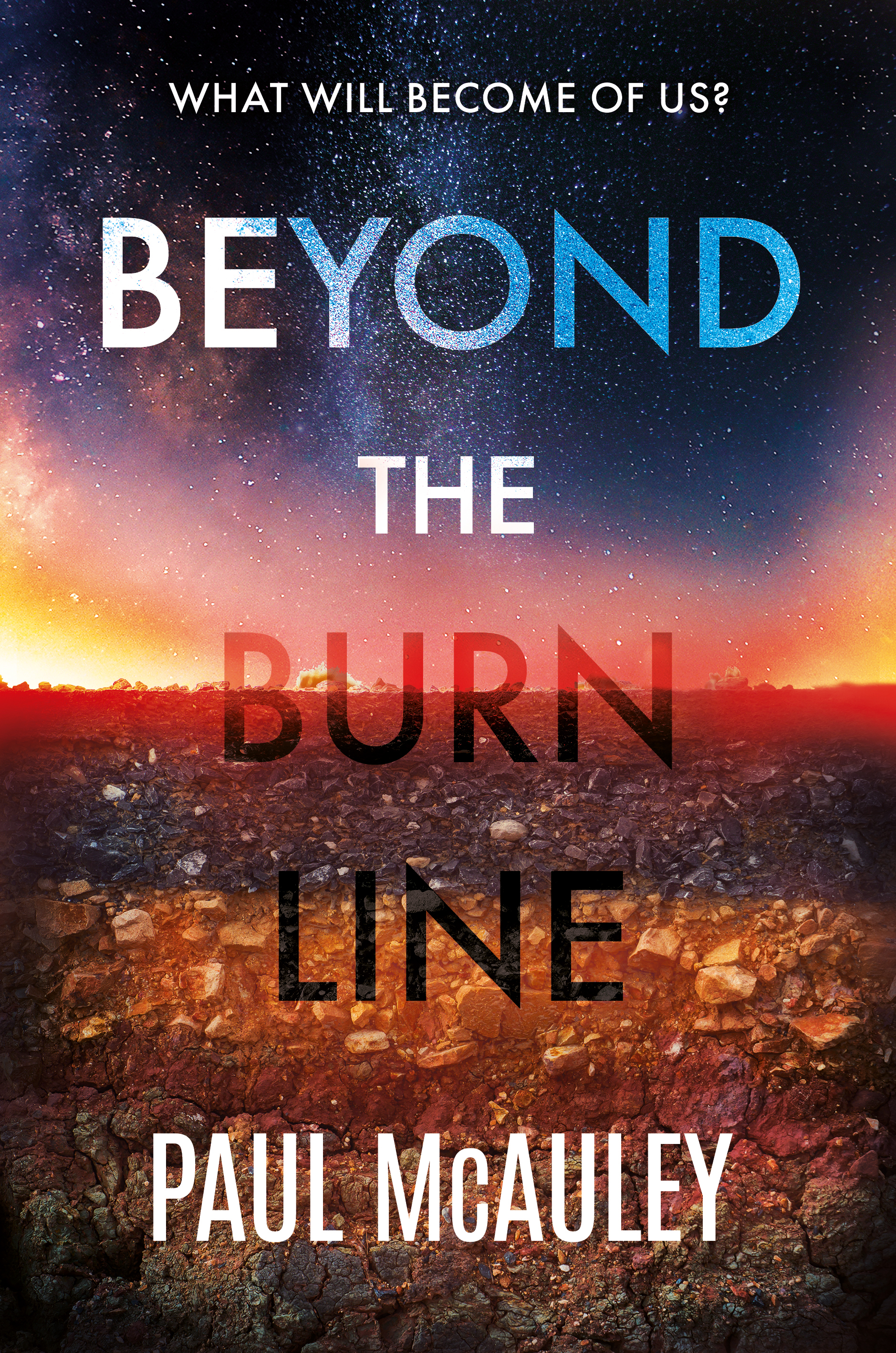
Cover Me

Cover for my post-anthropocene First Contact novel, out in the UK in September. Credit to the designer, Tomás Almeida. Hope you like it!

Monday, June 13, 2022

There Are Doors (27)

Sunday, June 12, 2022

Slight Return

Most of my online presence is over on Twitter (as @UnlikelyWorlds) these days. But as there's a new novel on the horizon, and two new editions of older titles, I've returned to blogging, which these days has all the quaint charm of, say, willow weaving. Maybe it's due for a revival, an alternative to the frantic blipverts of TikTok, or the transient reactiveness of Twitter. A slower, calmer polder in the internet's ever-changing architecture.

The first reissue is an ebook edition of my second novel, Secret Harmonies, first published in the US, in 1989, as Of the Fall. A title whose slight pun wouldn't, my then-editor Malcolm Edwards said, be appreciated by British readers; and thus the title change.

1987 US edition and 1997 UK reprint

It was a sort of prequel to my first novel, 400 Billion Stars: an earlier episode in a future history of interstellar exploration and colonisation that spanned about a dozen short stories and three novels. Like 400 Billion Stars, it featured a species of enigmatic alien, but the story was mostly concerned with the collapse into civil war of a colony that had established only a precarious foothold on an exoplanet orbiting Tau Ceti.

400 Billion Stars was banged out on a portable typewriter; Secret Harmonies was written in WordPerfect 4.2 on an Opus desktop computer that, as was standard in those early days, lacked a hard drive; instead, it had two disk drives, one for the disk which ran the WP programme, and the other for making copies of the WP file. And since my publishers did not then have the capacity to accept electronic files, it was printed out, one page at a time, using a dot-matrix printer (since it cost as much as the computer, I couldn't run to the extra expense of a paper feed). It was still a lot easier than typing and retyping every draft, though.

It was published as an original paperback in the US, but in the UK was, like 400 Billion Stars, first published as in hardback by Gollancz, one of the last of the yellow-jacket editions that I used to borrow from my local library when I was a spotty teenager. It was published in paperback by Orbit in 1991, with a lovely cover by Peter Ellson, reprinted in 1997 and thereafter fell out of print. Until now, when it has been revived as an ebook edition by the Gollancz Gateway, some 33 years after its first publication, in this wonderful, strange, terrible future of ours.

Orbit paperback edition and Peter Ellson's cover illustration


Monday, May 24, 2021

War Of The Maps Audiobook

 ... is now available from Audible. Narrated by the inestimable Jonathan Oliver.


Saturday, May 22, 2021

Regooding.

 Currently, somewhat slowly and erratically, redoing my website so that it's more user friendly and also easier to read on mobile phones, which I hear are all the rage now. Still a couple of main pages to fix, and the cached stories and non-fiction will take a little longer, but it's getting there. This is the third iteration; the first was handcoded in basic HTML back in the 1990s, when it was still mostly fields around here.

Tuesday, May 11, 2021

Make It New


This painting by Stanley Spencer popped up on my Twitter feed recently, and elicited an instant thrill of recognition. Spencer is best known for his paintings set in and around the Berkshire village of Cookham, where he was born and spent much of his life, but in 1939 he was lodging in the Gloucestershire village of Leonard Stanley, and that's where he painted this landscape of rolling fields breaking against the edge of the Cotswold escarpment. It's a view of part of the territory of my childhood: the treeless spur on the far left is Selsley Common, one of my playgrounds. I attended the little Primary school in Selsley village; my childhood home was at the base of the spur's steep rise. But while Spencer's version of this landscape evokes a strong sense of place and memory, it's also transformed, like his images of Cookham, into a vision of a verdant Arcadia. Fields are smoothed into sensual curves; forested slopes are as lush and exotic as one of Henri Rosseau's jungles. A lovely example of the metamorphic power of imagination, evoking the familiar and simultaneously making the viewer see it afresh, aslant.

Thursday, May 06, 2021

Award Season

War of the Maps, my novel about a long walk on a strange world in the very far future, is one of the top ten finalists for best science fiction novel in the 2021 Locus Awards. Thanks to everyone who voted! It's an especially cool tick mark given the intimidatingly excellent company on the list.

Tuesday, May 04, 2021

There Are Doors (26)


Sunday, January 31, 2021

World

There was a small commercial area a little further on, clustered around a crossroads where a huge latticework globe stood on a plinth of black baserock. Maps, some entire and others patchworked from islands or continents, none bigger than a child’s hand, were scattered thinly across its surface. The home map, Gea, was a squarish red tile close to the equator, smaller than most of the rest, and a silvery ball representing the Heartsun was spindled at the centre, and everything was spattered by the droppings of a fractious parliament of vivid green birds which had colonised the globe’s pole, chattering each to each and scolding passers-by.

 From War of the Maps 

Sunday, January 17, 2021

World-Building The Built World

'World is crazier and more of it than we think' Louis MacNeice, Snow

Worldbuilding is hard only if you pay too much attention to it. Less is almost always better than more. Use details sparingly rather than to drown the reader in intricate descriptions and faux exotica; question your first and second thoughts; set out a few basic parameters, find your character and start the story rather than fleshing out every detail of the landscape, drawing maps, and preparing recipe cards and fashion plates before writing the first sentence. Wherever possible, scatter clues and trust the reader to put them together; give them the space to see the world for themselves rather than crowd out their imagination with elaborate and burdensome detail.

Most of the heavy lifting for the worldbuilding of War of the Maps was already done for me in a speculative scientific paper, 'Dyson Spheres around White Dwarfs' by Ibrahim Semiz and Selim Oǧur. That gave me the basic idea: a very large artificial world wrapped around a dead star, its surface a world ocean in which maps skinned from planets were set. Almost everything else was tipped in as the story progressed. Discovering details essential to the story as it rolls out gives space and flexibility to hint at the kind of random, illogical, crazy beauty of the actual world; the exclusionary scaffolds of rigid logic too often do not.

And because the novel is written in close third person, everything is filtered through the sensibility of the main character, focusing on things that he would think important or memorable or odd, evoking the mundane stuff of his life by allusion or by borrowing the perspectives of others. The fighting staff he carries isn't described in any particular detail until someone else becomes interested in it; as a child living in a desert village he helped herd cacti up and down a mountain but doesn't think of the specifics of cactus herding until he's questioned about it; his desert childhood makes him pay particular attention to water, providing a theme running through the narrative, stitching character and world together.

Some of the furnishings came from searches for specific items, but the method I most prefer is a kind of bricolage, tipping in places as disparate as a spring in Death Valley, a courtyard glimpsed in Shanghai, Fay Godwin's photograph of a canal in the Pennines, the patina of the snout of a statue of a dog in Edinburgh, radio telescopes in a Cambridgeshire field, a square in one hilltop village in Italy and the painted doors of houses in another, mangrove islands off the coast of Florida . . . Chosen for their evocation of atmosphere and emotion, and because they seemed, somehow, to fit the internal consistency, the feel, of the novel. Subjectivity over objectivity, because we are not cameras, and novels aren't diagrams or photographs.

Thursday, January 07, 2021

Out Today!


Released today in the UK, the relatively inexpensive paperback edition of War of the Maps, in which a retired lawkeeper sets out to recapture an old enemy, and stumbles into the middle of a strange invasion of his strange, vast world. One of the Washington Post Book World's and the Guardian's science fiction novels of the year.

'The spectacle is undeniable, but it's that rich cast of characters who give their world texture and resonance, and who finally turn War of the Maps into a fine, compelling novel' ― Locus

'Narrative drive and a sense of wonder come together in McAuley's graceful prose'Guardian  


'McAuley is without peer' ― The Times

And over on Twitter, a reader just compared it to Iain M. Banks' fiction; I can think of no higher praise.

Thursday, December 31, 2020

Some Of The Books From 2020 That I Especially Liked.


Friday, September 25, 2020

Here And Now

I recently wrote the last words of the patchwork draft of a novel I have been working on for the past six months or so. It isn't the novel I intended to write this year -- that has been put on hold because it deals with problems that spring from our common now, and for obvious reasons it's not possible to know how the current great changes will work out. Instead, I've been working on something located in the cloudy heights of a distant future shaped by, and trying to escape from or at least make sense of, the multidinous legacies of the Anthropocene. It started out as a throwaway idea, a fun little notion that developed and deepened in the telling along lines and themes that may be relevant to some of our concerns in the here and now. Those last words will almost certainly change in the redrafting, but they'll do for the moment.


Sunday, July 26, 2020

Hampstead Heath, January - June 2020

Snapshots from Sunday morning walks in the grasslands and woods of Hampstead Heath, in the first half of the year.

January

February

March

April

May

June
Newer Posts Older Posts